

Last updated: October 13, 2026
Suit pockets are sewn shut because the stitching is a temporary measure. It keeps the pocket openings flat while the jacket is pressed, packed, shipped and displayed. In most cases the pocket underneath is a real one that simply needs the thread removed, but sometimes it is purely decorative and was never meant to open. Knowing which you have, before you pick up any scissors, is the part that matters.
What Is the Stitching on a New Suit Pocket?
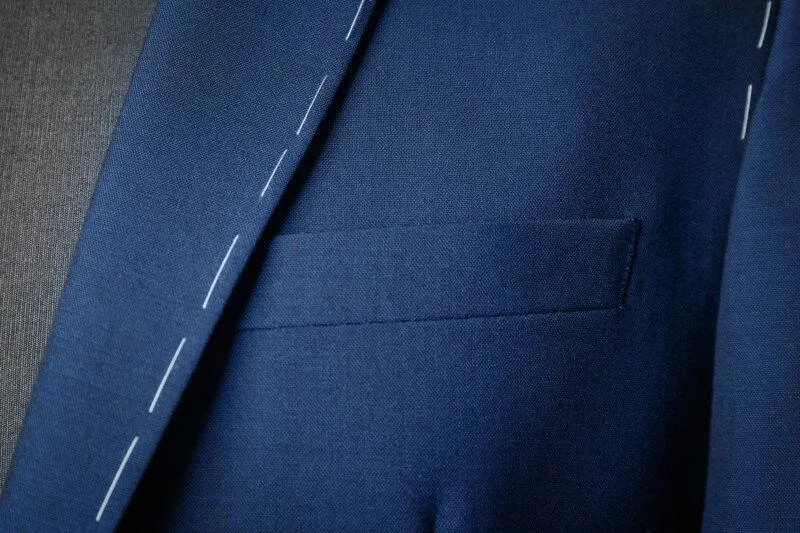
The thread across a new pocket is called tack stitching, or basting. It is a loose, long-stitched line, usually in a thread that stands out from the cloth, which is placed to hold the opening shut for a while and then come out again. Thread colour varies from garment to garment, so do not rely on spotting white thread alone.
The stitching is temporary and is generally removed before wear when it closes a functional pocket. However, the pocket itself may be decorative, so check the construction before removing any thread
Why Are Suit Pockets Sewn Shut?
There are a few practical reasons, and they overlap.
A jacket spends a surprising amount of time being handled before it reaches you. It is pressed, hung, folded, boxed and moved around, and an open pocket can catch, stretch or distort during all of that. Closed pockets are less likely to pick up damage in transit.
Shape is the second reason. An open pocket can collapse or crease, and it can pull the front of the jacket slightly out of line. A closed one keeps the cloth smooth, so the jacket looks crisp on the rail and when you first try it on.
Keeping pockets closed can also discourage overloading them. Heavy items such as phones, wallets and keys can create visible bulges and affect how the jacket hangs.
Functional Pockets vs Decorative Pockets
“Sewn shut” can describe three different situations, and mixing them up is where most mistakes begin.
Pocket type or condition | What it means | Can it be opened? |
Functional pocket with temporary stitching | A usable pocket that has been temporarily closed with removable thread | Usually, once the temporary stitching is safely removed |
Functional pocket already open | A constructed pocket with an opening and an internal pocket bag | Yes, if it is designed for use |
Decorative or faux pocket | An exterior detail without a usable pocket opening | Not without potentially damaging or reconstructing the garment |
The first two overlap, because a functional pocket on a new suit usually has temporary basting across it. The real contrast is between a pocket that is merely tacked shut and one that was never constructed to open. Not every sewn-shut pocket is functional, and not every pocket needs to be opened.
Different Types of Suit Jacket Pockets
The pockets most often found closed on a new jacket are the hip pockets, which come in three main styles.
Jetted (besom) pockets are a clean slit finished with narrow strips of cloth along the edges and no flap. They are generally the most formal style and sit very neatly against the jacket.
Flap pockets are a jetted opening with a flap of cloth over the top. They are the usual choice for business suits. The flap can be worn outside or tucked in, though both sides should match. One in and one out looks accidental.
Patch pockets are applied to the outside of the jacket rather than cut into it. They usually read as more casual, though how usable they are depends on how they were made.
Two smaller pockets are worth knowing about. The chest pocket on the left is intended mainly for a pocket square, not for everyday items, and is best kept light. A ticket pocket is a small extra pocket above one hip pocket. It is a style detail rather than a necessity, and its name comes from an older use that you do not need to follow.
What About Trouser Pockets?
Trouser pockets are a different matter. They are normally functional from the start, and the front pockets are made for regular use. Rear pockets vary by design: some trousers have none, some have one jetted pocket, some have two. The same sensible caution applies, though. A bulky wallet or phone can show as visible unevenness and put strain on the cloth over time.
How to Tell Whether a Suit Pocket Is Functional
Before removing any thread, it helps to check what you are dealing with.
- Look for the thread. A loose, temporary line across or beside the opening is typical basting.
- Check the opening itself. A real pocket has a finished slit, with welt edges or a flap. A decorative one may just be a line or an applied detail.
- Feel behind the opening. Slide a finger inside the jacket where the pocket sits. A constructed pocket has an interior pouch, the pocket bag. A decorative pocket will not.
- Test one thread end gently. Basting thread is normally loose and draws out without force. If it resists, or seems to be part of a permanent seam, stop there.
- Ask a tailor if you are unsure. That is sensible on an expensive suit, a delicate fabric, or a jacket with unusual pocket construction.
How to Remove Temporary Pocket Stitching Safely
The aim is to remove the thread and nothing else. The real risk is cutting into the pocket bag, facing, lining or jacket cloth by accident, so go slowly.
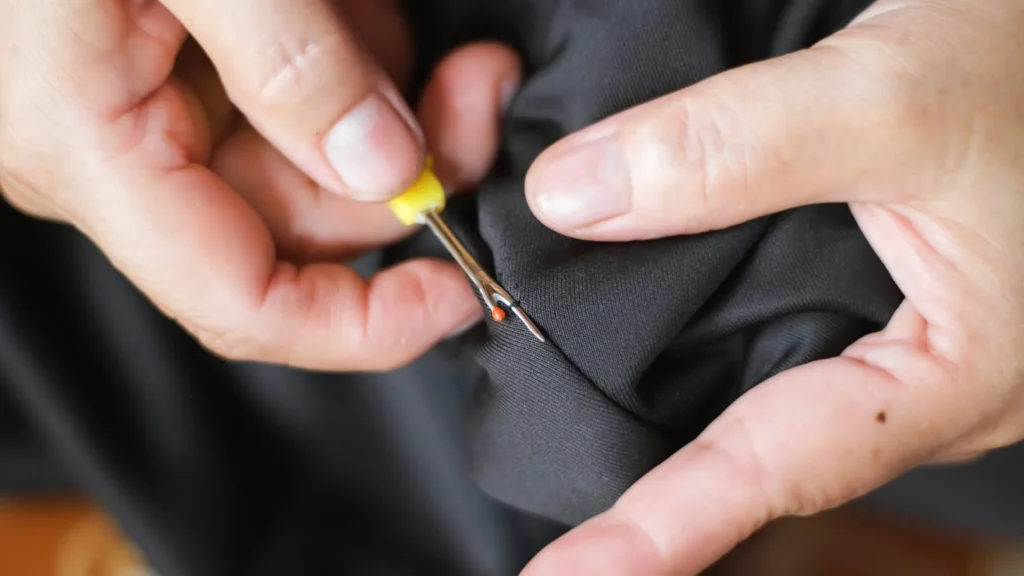
Lay the jacket flat in good light. Use a seam ripper or small embroidery scissors, and a fingernail to lift the thread away from the cloth. Cut only the temporary thread, either stitch by stitch or at a few points along the line, then gently withdraw the loose ends. Do not pull hard, saw at the fabric, or reach for large household scissors, since those make it far easier to slip and cut the jacket instead of the thread.
When you have finished, check inside to make sure the pocket bag is intact and no stray threads are left behind.
If the thread seems tight, the cloth is delicate or patterned, or you simply feel hesitant, take the jacket to a tailor. A few minutes of professional attention costs far less than repairing a cut.
Should You Keep Suit Pockets Closed?
Opening functional pockets is optional, and leaving them closed is a perfectly legitimate choice.
Closed pockets keep the front of the jacket clean and preserve the drape it was cut with. They also avoid the sagging or stretching that comes from repeated use. Many men open them and use them lightly, for a folded handkerchief or a slim card, and that works well enough. The trouble starts with heavy items, which pull the jacket down on one side and spoil the line. The breast pocket and the interior pockets are better places for small things you need to carry. If a tidy fit matters to you, our guide to a perfect fitting suit in Dubai explains what a good jacket should do on the body.
What About Jacket Vents and Sleeve Button Stitching?
Pockets are not the only place temporary thread is used.
Back vents are often held closed with basting stitches. Unlike pockets, there is usually no good reason to leave them that way. A vent is there to give the jacket room to move, so the tacking should normally come out before the first wear.
Sleeve buttons need more care. Temporary tacking around the buttons or cuff area is normally removable, but not every thread near a cuff is temporary. Some jackets have working buttonholes, sometimes called surgeon’s cuffs, which let the cuff actually be unbuttoned. Others have decorative buttons that are permanently sewn on as part of the design. Neither of these is stitching to be removed. If you cannot tell what a thread is securing, leave it and ask.
If you are unsure whether a thread is temporary or part of the sleeve’s construction, do not remove it until a tailor has checked it.
Common Mistakes First-Time Suit Buyers Make
The most frequent mistake is assuming every sewn-shut pocket is fake. Many are fully constructed and only temporarily closed, so it is worth checking before dismissing them.
The second is cutting first and inspecting second. Slicing straight into a pocket opening risks damaging the bag or the cloth, which is why the inspection steps above come before any cutting.
Others are quieter. Wearing flap pockets with one flap tucked in and one out, leaving vent tacking in place, and loading the pockets until the jacket sags all take away from a well-made suit. For more on the fit side of things, see these common suit-fitting mistakes men make.
Frequently Asked Questions
Are sewn-shut suit pockets fake?
Not necessarily. Many are real pockets that are temporarily basted. Others are decorative and have no pocket bag, which is why checking for one is the quickest way to know.
Should I cut the stitching on my suit pockets?
Only once you have confirmed that it is temporary basting and that the pocket is functional. If you are unsure, ask a tailor.
Can a tailor add a pocket to a jacket?
Sometimes, but it can be complex and costly because it may involve the lining, pocket bag and jacket front. It needs to be assessed in person.
Does removing the stitching affect a warranty?
That depends on the retailer, so there is no universal rule. If it matters to you, ask the seller before removing anything.
Why are suit jacket vents sewn shut?
New suit jacket vents are often held closed with temporary basting stitches to keep the garment neat during handling and display. These stitches are generally removed before the jacket is worn.
Can you open a decorative suit pocket?
A decorative pocket may not have a usable opening or internal pocket bag. Trying to open it can damage the jacket, so ask a tailor to inspect it if you are unsure.
Not Sure What You're Looking At?
If a pocket, vent or cuff on your new jacket looks unfamiliar, it is usually quicker to have it checked than to guess. You are welcome to get in touch with the team at The White Stripes Tailors & Shirtmakers in Dubai, and we can help you understand how your suit is made before you pick up the scissors.

Asif
I’m Asif, a men’s tailoring and bespoke specialist at The White Stripes Tailors and Shirtmakers with 15+ years of hands on experience in creating custom clothing and bespoke suits. I focus on delivering perfect fit, comfort, and modern Style for every client based in the UAE and beyond.
I work closely with clients to understand their preferences and guide them in selecting the right fabrics, designs, and fittings for both formal and casual wear. My approach combines traditional tailoring techniques with current fashion trends to ensure high-quality results.
Through The White stripes, I also share practical insights on suit fabrics, styling tips, and tailoring guidance to help customers make confident choices.
All Posts
Written By:
Recent blog posts
What Can Be Altered on a Suit? A Dubai Tailor’s Guide to What’s Possible
Asif
October 13, 2026
Read More »

What to Wear for a Business Meeting in Abu Dhabi: An Executive Dress Code Guide
Asif
September 25, 2026
Read More »