
Last updated: August 25, 2026
Dubai dresses like nowhere else on earth. A five-minute walk can take you from a glass-tower boardroom in DIFC to a beach club terrace, and your wardrobe needs to keep pace. This guide breaks down exactly what to wear in Dubai — season by season, occasion by occasion — so you’re never the guy who’s overdressed at brunch or underdressed at a client dinner.
Business Meetings
Dubai’s business culture blends Gulf formality with international finance polish. For a first meeting — especially with government entities, banks, or family-run conglomerates — a tailored two-piece suit in navy or charcoal is the safe, respected choice. Lighter grey works well from April through October. Pair it with a crisp white or pale-blue shirt and a conservative tie; ties are increasingly optional in creative and tech sectors, but keep one in your bag for conservative counterparts.
Image suggestion: Man in navy suit shaking hands in a glass-walled Dubai boardroom, skyline visible.
Office Wear
Outside client-facing roles, most Dubai offices have settled into “smart business casual”: tailored trousers, a button-down or knit polo, and loafers. Free zones tied to tech and media (Dubai Internet City, Dubai Media City) trend more relaxed than DIFC or government-adjacent firms. A good rule: dress one notch above your industry norm on Sundays and Mondays, when most internal meetings happen.
DIFC Dress Code
The Dubai International Financial Centre is the city’s most formal business district, and dress here still signals credibility. Full suits remain standard for client meetings, banking, and legal services; business casual (blazer, no tie) is acceptable for internal days. Because DIFC hosts numerous nationalities and faiths, dress leans conservative rather than trend-driven — think tailoring over statement pieces.
Setting | Expected Dress Code |
DIFC client meeting | Full suit, tie optional in summer |
DIFC internal office day | Blazer, dress trousers, open collar |
DIFC after-work networking | Smart casual, blazer recommended |
Read our [DIFC Business Attire Deep Dive] for gate pass etiquette and building-specific norms.
Weddings
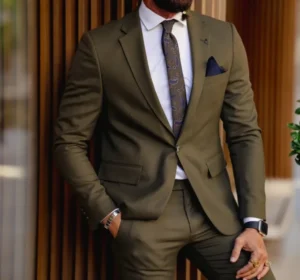
Emirati, Arab, and South Asian weddings — the majority in Dubai — call for elevated formalwear, not the dark suits typical of Western weddings. A well-cut suit in a rich jewel tone (bottle green, deep burgundy, midnight blue) or a Nehru-collar bandhgala reads celebratory without competing with the couple. For strictly formal invitations marked “black tie,” a tuxedo is appropriate; always check the invitation for a stated dress code, which Dubai hosts increasingly specify.
Smart Casual
Smart casual is Dubai’s default social uniform — for brunches, business lunches, and evening plans that aren’t quite “dressy.” The formula: a linen or cotton shirt (untucked or half-tucked), tailored chinos or dark denim, and leather loafers or clean sneakers. Blazers elevate the look instantly for evening venues with a smarter door policy.
Casual Weekends
Weekends run Friday–Saturday in the UAE. For malls, cafes, and daytime outings, breathable T-shirts, shorts (knee-length is safer in mixed company), and comfortable sneakers work fine. Note that some malls and all mosques require shoulders and knees covered — keep a light overshirt handy.
Luxury Restaurants
Fine dining in Dubai — from DIFC steakhouses to Palm Jumeirah tasting menus — typically enforces a “smart elegant” policy: collared shirts, closed shoes, and tailored trousers. Many top venues explicitly bar shorts, flip-flops, and sleeveless tops for men. When in doubt, call ahead; several restaurants list dress codes on their reservation pages.
Comparison table:
Venue Type | Minimum Dress Code |
Casual café | T-shirt, shorts, sneakers |
Mid-range restaurant | Collared shirt, chinos, closed shoes |
Fine dining / rooftop lounge | Blazer or tailored shirt, dress shoes |
Members’ club | Full smart elegant, jacket often required |
Beach Clubs
Beach clubs sit between resort wear and smart casual. Swim shorts and a linen shirt work poolside, but most clubs require cover-ups and closed or smart sandals once you move from the pool to the restaurant area. Avoid bare chests indoors — nearly every beach club in Dubai enforces this.
Ramadan Dress Code
During Ramadan, modesty expectations rise across the city, even for non-Muslims and tourists. Shoulders and knees should be covered in public and workplace settings; shorts, tank tops, and overly fitted clothing are best avoided in malls, offices, and on public transport until after Iftar. Business attire stays largely the same, though many offices shift to shorter working hours.
“Ramadan dressing isn’t about religion for visitors — it’s about respect. Cover up, tone down, and you’ll never feel out of place,” notes a Dubai-based image consultant who advises expat executives on cultural dress norms.
Summer Dressing
From May to September, daytime temperatures regularly exceed 40°C, and humidity near the coast makes it feel hotter still. Prioritize loose-fitting linen and cotton in light colors, which reflect heat rather than absorb it. Air-conditioned offices and malls mean you’ll want a light layer for indoor cold, even in peak summer.
Winter Dressing
Dubai’s “winter” (November–March) is mild by global standards — daytime highs of 20–28°C, evenings cooler. A light knit sweater, an unlined blazer, or a bomber jacket is usually enough; heavy coats are unnecessary except for early morning desert excursions, when temperatures can dip into single digits.
Fabrics for Dubai Weather
Fabric | Best For | Why |
Linen | Summer, casual | Breathable, quick-drying |
Cotton poplin | Office shirts | Crisp, breathable, low-sweat show |
Tropical wool | Business suits | Lightweight structure, less creasing |
Seersucker | Smart casual summer | Textured weave keeps fabric off skin |
Merino knits | Winter evenings | Warm without bulk |
Avoid heavy wool blends and synthetic polyester shirts — both trap heat and show sweat quickly in Gulf humidity.
Shoes
Leather loafers are Dubai’s most versatile men’s shoe, moving from office to dinner without a hitch. Oxfords or derbies suit formal business and weddings; clean minimalist sneakers cover smart casual and weekend wear. Sandals are acceptable at beach clubs and casual daytime settings only — never in offices or fine dining.
Accessories
Keep accessories understated: a quality leather belt matched to your shoes, a simple watch, and sunglasses with UV protection (non-negotiable given the sun exposure). A lightweight scarf or pocket square adds polish for weddings and evening events without overdoing it.
Color Guide
Season/Occasion | Recommended Colors |
Business/DIFC | Navy, charcoal, grey, white |
Summer casual | White, sand, sky blue, pastel green |
Weddings | Jewel tones — emerald, burgundy, midnight blue |
Winter evening | Deep neutrals — camel, black, forest green |
Light colors reflect heat and suit daytime; darker, richer tones read better after sunset and in air-conditioned interiors.
Grooming Tips
Humidity and sun exposure mean grooming routines need adjusting. A lightweight, oil-free moisturizer with SPF protects against sun damage during outdoor commutes. Beard oil helps combat dryness from air conditioning, and frequent haircuts (every 3–4 weeks) are the norm given Dubai’s fast-paced grooming culture — barbershops are plentiful and affordable across the city.
Common Dressing Mistakes
- Overdressing for casual brunches — smart casual, not full suits, is the norm.
- Wearing shorts into offices or fine dining — even in extreme heat, this reads as underdressed.
- Ignoring mall and mosque modesty rules — always carry a cover-up.
- Heavy fabrics in summer — polyester and thick wool cause visible sweating within minutes outdoors.
- Flip-flops at “smart elegant” venues — always confirm the dress code before booking.
Packing Guide for Visitors
- 2–3 linen or cotton shirts
- 1 tailored blazer (doubles for dinners and business)
- 1 pair chinos, 1 pair dark jeans
- Swimwear + lightweight cover-up
- 1 pair loafers, 1 pair sneakers
- Sunglasses, light scarf for mosque visits
- A light jacket if traveling November–February
Frequently Asked Questions
What is the dress code for men in Dubai?
Dubai has no single legal dress code for tourists, but modest, smart clothing is expected in public, with stricter modesty rules in malls, offices, and during Ramadan.
Can men wear shorts in Dubai?
Yes, in casual and beach settings. Shorts are generally discouraged in offices, government buildings, malls’ interior sections, and fine dining restaurants.
What should men wear to a business meeting in Dubai?
A tailored suit in navy, charcoal, or grey is the safest choice, especially for first meetings in DIFC or with government entities.
Is a tie required in Dubai offices?
Less so today — many industries, especially tech and creative sectors, have moved to open-collar business casual. Keep one on hand for conservative meetings.
What do men wear to weddings in Dubai?
Rich-colored tailored suits or bandhgalas for most weddings; tuxedos only when the invitation specifies black tie.
Conversion CTA
Ready to build a Dubai-proof wardrobe? Book a personal styling consultation with our Dubai-based stylists — from DIFC-ready suits to wedding-season tailoring, we’ll help you dress right for every occasion the city throws at you. [Book Your Style Consultation →]

Asif
I’m Asif, a men’s tailoring and bespoke specialist at The White Stripes Tailors and Shirtmakers with 15+ years of hands on experience in creating custom clothing and bespoke suits. I focus on delivering perfect fit, comfort, and modern Style for every client based in the UAE and beyond.
I work closely with clients to understand their preferences and guide them in selecting the right fabrics, designs, and fittings for both formal and casual wear. My approach combines traditional tailoring techniques with current fashion trends to ensure high-quality results.
Through The White stripes, I also share practical insights on suit fabrics, styling tips, and tailoring guidance to help customers make confident choices.
All Posts
Written By:
Recent blog posts
What Can Be Altered on a Suit? A Dubai Tailor’s Guide to What’s Possible
Asif
October 13, 2026
Read More »

What to Wear for a Business Meeting in Abu Dhabi: An Executive Dress Code Guide
Asif
September 25, 2026
Read More »