
Last updated: November 20, 2026
You try on a jacket and the shoulders sit nicely. Then you look down and the waist is billowing out like a sail. So you go a size down to fix it, and now the button pulls into an X-shaped crease and you can’t lift your arms without the whole jacket riding up.
Neither result means your body is the problem. Most off-the-rack jackets are cut for a straighter torso than yours. Finding a suit jacket for broad shoulders and a narrow waist is mostly a matter of making a few decisions in the right order, and knowing which problems a tailor can fix afterwards and which ones they can’t.
Why Standard Jackets Struggle With a V-Shaped Build
Standard sizing assumes the chest, waist and hips sit closer together than they do on an athletic frame. If you have a pronounced drop from shoulder to waist, you’re usually dealing with a developed chest and back, sometimes muscular arms, and often sloping trapezius muscles. You’re not necessarily a large man. You just don’t match the rectangle the pattern was drawn around.
That mismatch shows up in a few familiar ways:
- Shoulder divots. Small dents near the top of the sleeve, usually because the shoulder seam extends past your natural shoulder point.
- A tight chest. Horizontal wrinkles, pulling across the upper back, or an X-shaped strain around the button.
- Excess fabric at the waist. A jacket sized for your shoulders tends to be straight and boxy through the middle.
- Hip flare. Common when the jacket is long, stiff or doesn’t have enough shape at the waist.
- Sleeve trouble. Rippling at the sleeve head, or sleeves that pull when you move your arm.
- Poor balance. A collar that gaps, a front that hangs unevenly, or a jacket that looks short against a wide upper body.
These problems often get treated as separate issues, but they’re connected. A divot, for instance, can come from shoulder width, padding, sleeve pitch, armhole shape or overall balance. That’s why the order of decisions matters.
Start With the Shoulders, Not the Size Label
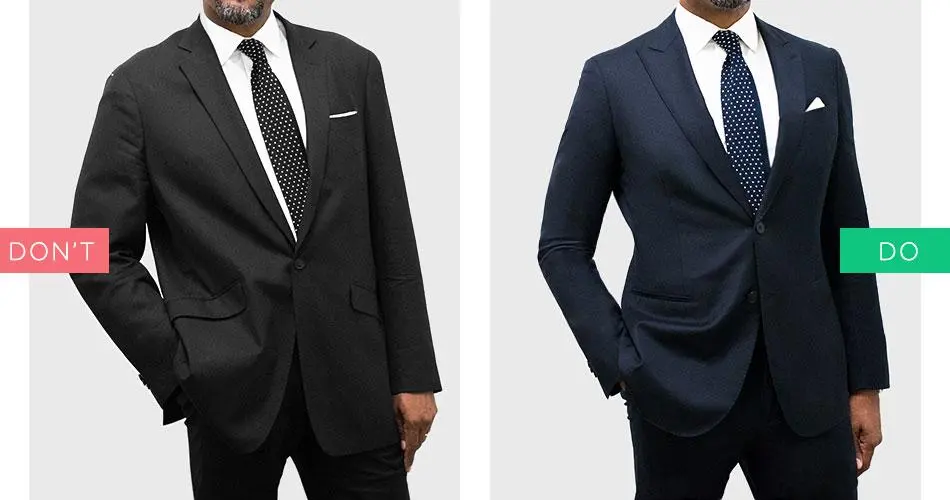
Buy for your shoulders first. Shoulder width, slope and the way the sleeve head sits in the armhole are built into the jacket’s structure, and they are the hardest things to change later. Waist shaping and sleeve length are far easier.
A well-fitted shoulder lies flat, and the seam ends at the edge of your natural shoulder point. If the seam hangs over the edge of your arm, you’ll typically see a divot at the sleeve head. If it’s too narrow, it binds across the upper back and pushes the sleeve inward. Both look wrong, and neither is something a quick trip to the alterations desk will cure.
One trap catches a lot of muscular men: adding heavy padding to a wide-cut jacket to fill it out. It can exaggerate width rather than solve the fit. A lightly structured shoulder usually gives a cleaner line, though how much structure suits you depends on your shoulder slope and the style you like. If dropped shoulders or a gapping collar are what you keep running into, our piece on collar gap and dropped shoulders on an athletic build goes deeper into the causes.
Getting the Chest Right Without Going Boxy
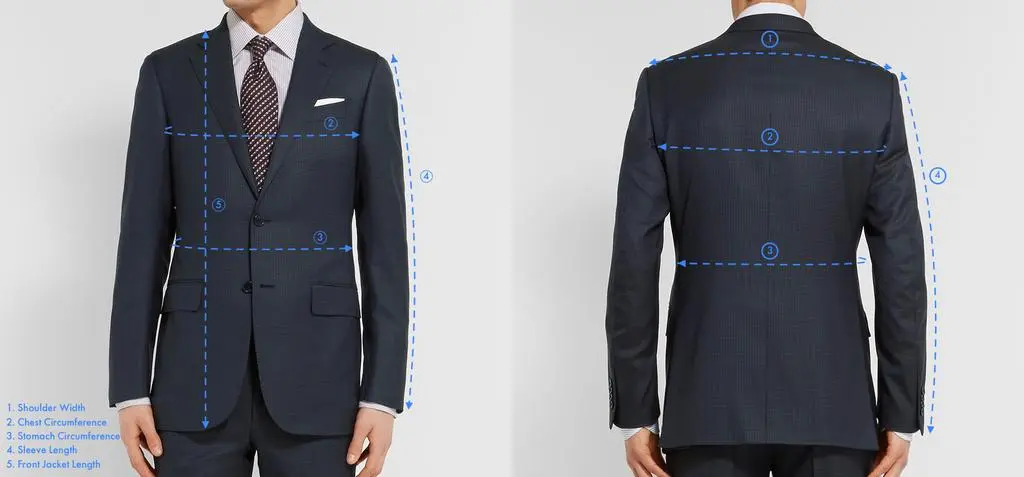
Once the shoulders are right, look at the chest. The jacket should close smoothly, the lapels should lie flat against you, and you should see no horizontal pulling or X-shaped wrinkle under the button. If your suit chest feels too tight, the fabric is telling you it needs more room across the front or back, not that you need to hold your breath.
A rough ready-to-wear check: button the jacket and slide a flat hand behind the front panel. It should go in without a fight. This is one retailer’s rule of thumb rather than a precise measurement, so treat it as a guide, not a pass or fail.
Good chest room doesn’t mean a boxy cut. The room belongs in the chest, and the extra fabric below it is what a tailor takes out. That’s the whole idea behind an athletic cut.
Waist Suppression That Follows Your Body
Jacket waist suppression is the shaping that pulls the jacket in between the chest and the hip. For a V-shaped body it’s often the most noticeable improvement, and also the easiest to
over-do.
The aim isn’t to hit a small waist number. It’s a clean, continuous line from chest to hip, with no pulling at the button and no fabric billowing at the sides. Push the taper too far and you get button strain, collar gaps and a silhouette that looks like it’s fighting your body instead of following it.
Tailors usually take in the side seams to remove excess fabric, but how much they can take depends on the seam allowance, pocket placement, lining and the jacket’s original balance. So waist shaping is workable, not unlimited.
Armholes and Sleeves: The Overlooked Part of the Fit
This is where many broad-shouldered men feel the difference between a jacket that looks good standing still and one that’s comfortable all day.
Armholes. A higher, well-shaped armhole can let your arm move without dragging the whole jacket body with it. That’s the idea behind a high armhole suit fit. But it has to be designed into the paettrn. Tightening an existing armhole afterwards doesn’t achieve it.
Sleeve pitch. In plain English, this is the angle at which the sleeve is set into the armhole. It should match how your arm naturally hangs. If it doesn’t, you’ll see rippling at the sleeve head or pulling across the chest. Fixing a poor sleeve pitch on a suit jacket means removing the sleeve and setting it again, which is a significant job rather than a quick tweak.
Sleeve width. If your arms are muscular, prioritise enough bicep room and a sleeve that hangs cleanly. Narrowing a sleeve that’s already tight tends to create pulling and restrict movement.
Sleeve length. This one is straightforward to alter within limits. How much shirt cuff you show is a style preference, though a small amount is the conventional finish.
Jacket Length, Lapels, Button Stance and Vents
These are proportion tools rather than rules. They help a jacket look balanced on a wide upper body, and the right choices depend on your height, torso length and the occasion.
- Length. A jacket that’s slightly too short can make a broad upper body look cropped or top-heavy. Shortening a jacket is possible, but pockets and the button position generally can’t move, so large length changes aren’t reliable. It’s better to get the length right from the start.
- Lapels. A medium-width lapel generally suits a broad chest and shoulder line better than a very narrow one, which can make the upper body look larger by contrast. That’s a styling guideline, not a construction rule. Our guide to bespoke suit lapel styles covers how notch, peak and shawl lapels change the look.
- Button stance. A higher stance visually shortens the torso and a lower one lengthens it. On a V-shaped build, the buttoning point should sit naturally at the waist and let the jacket close without strain.
- Vents. Side vents are practical for movement and tend to reduce bunching at the back. Vent choice is still partly personal taste.
Slim, Tailored or Athletic: Which Cut Suits a Broad-Shouldered Build?
“Slim fit” is the label men with an athletic build suit fit usually reach for first, and it’s often the wrong one. A slim jacket reduces ease through the chest, waist and sleeves all at once. If your shoulders and chest already fit, that can work. If they don’t, you end up with pulling, tight sleeves and restricted movement. A slim jacket that strains at the chest or button isn’t an athletic fit. It’s just too small.
For most men with this build, the best starting point is a tailored or athletic tailored cut: enough room in the shoulders and chest, then controlled shaping at the waist to remove what standard cuts leave behind. Athletic fit is also a marketing term, so the actual cut varies a lot between brands. Try before you trust the label.
|
Cut |
What it means |
How it suits this build |
|
Slim fit |
Less overall ease through chest, waist, sleeves and trousers |
Works only if shoulders and chest already fit. Risks pulling and tight sleeves on muscular frames |
|
Tailored fit |
Clean silhouette, more room through chest and seat, moderate waist shaping |
Usually the safest off-the-rack starting point. A tailor can refine the waist afterwards |
|
Athletic fit |
More room through shoulders and chest, trimmer waist |
Often the closest ready-to-wear idea for a V-shaped torso, though quality and cut vary by brand |
If you’re curious how a slimmer cut looks when it’s built around the individual, take a look at our slim fit suits.
The V-shape itself is a good thing to have. It just needs to come from a jacket that follows your natural drop, not from aggressive suppression that creates stress lines and collar gaps.
Ready-to-Wear, Made-to-Measure or Bespoke?
The right route depends mostly on how big your chest-to-waist drop is and how well a standard pattern copes with it.
- Ready-to-wear can work if your shoulders, chest and sleeves fit a standard block reasonably well and only the waist needs refining. Get the shoulders right, then ask a tailor to assess the waist, sleeve length and minor balance issues.
- Made-to-measure adjusts an existing house pattern to your measurements. It’s a clear step up for a large drop, but it can’t fully overcome a base pattern that doesn’t suit your frame.
- Bespoke means a pattern drafted for you, with fittings along the way. That matters most when your shoulder slope, chest shape, arm position, posture or asymmetry need a genuinely individual pattern.
|
|
Ready-to-wear |
Made-to-measure |
Bespoke |
|
Starting point |
Standard size and block |
House pattern adjusted to your measurements |
Pattern drafted for you |
|
Fit for a big chest-to-waist drop |
Depends on the block, waist can be refined |
Better, but limited by the base pattern |
Built around the drop |
|
Shoulder slope, posture, asymmetry |
Hard to accommodate |
Partly, within the pattern’s limits |
Can be addressed in the pattern |
|
Fittings |
Alterations after purchase |
Varies by maker |
Multiple fittings to assess fall, sleeve and collar |
The practical rule: ready-to-wear if the shoulders fit, made-to-measure for a moderate drop, bespoke for complex proportions or a high standard of balance and movement. If you want to compare the made-to-measure vs bespoke suit question further, our article on custom suits versus ready-made is a good next read, and we’ve written about what a bespoke suit costs in the UAE if budget is part of the decision.
What a Tailor Can Alter, and What They Can't
Before you buy a jacket “to be fixed later”, it helps to know where the limits are. Suit alterations for shoulder width are the clearest example: a small narrowing may be possible depending on the jacket’s construction, but a major change isn’t realistic. Waist and sleeve length are the comfortable ones.
|
Usually practical |
Difficult or often not worth attempting |
|
Sleeve length |
Shoulder width and slope (only limited narrowing, depending on construction) |
|
Waist shaping through the side seams, within the seam allowance |
Chest volume |
|
Minor side-seam adjustments |
Armhole shape |
|
|
Sleeve pitch (the sleeve has to be removed and reset) |
|
|
Major changes to jacket length or balance |
|
|
Fused-jacket bubbling across the chest (can’t be reversed) |
Our guide to what can be altered on a suit lists more of the everyday alterations, and 7 common suit fitting mistakes is worth skimming before you buy anything off the rail.
Fabric and Construction: Why They Change How a Jacket Fits
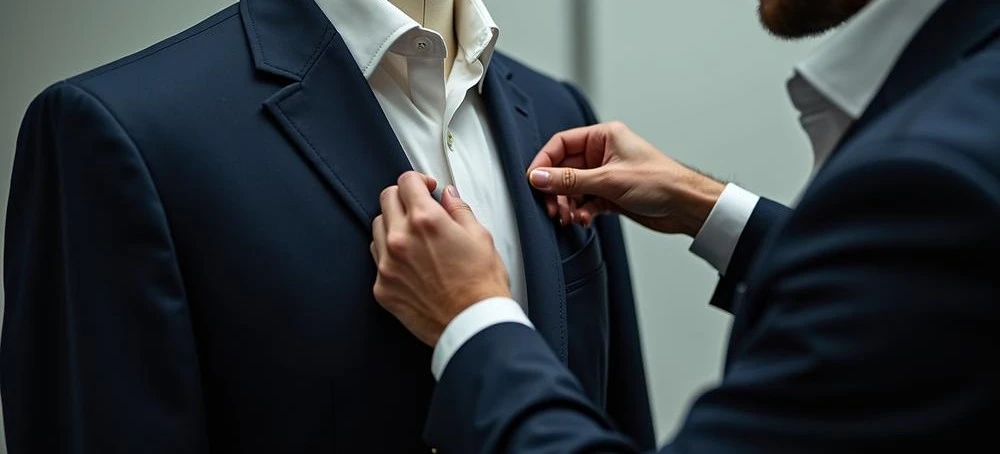
A jacket for this build has to be planned around several things at once: shoulder slope, chest shape, the size of the waist drop, how your arms hang, your posture and the cloth. Standard sizing can’t weigh all of that for you, which is why bespoke tailoring tends to suit men with a V-shaped frame.
At The White Stripes Tailors & shirtmakers, the consultation starts with those proportions rather than with a size. Fittings give us the chance to see how the jacket falls across the chest, how the sleeve sits at the shoulder and how the collar rests before the jacket is finished. We’d rather adjust it at that stage than promise an outcome before we’ve seen it on you.
If you’re preparing for your first fitting, our bespoke suit fitting checklist shows what to expect and what to bring, and you can book an appointment whenever you’re ready to talk through your own measurements and preferences.
Frequently Asked Questions
How should a suit jacket fit someone with broad shoulders?
The shoulder seam should end at your natural shoulder point, and the shoulder should lie flat with no divot, overhang or pulling across the upper back. Once that’s right, the chest should close without wrinkles and the waist should follow your body without strain.
Is athletic fit better than slim fit for muscular men?
Usually, yes, because it’s cut with more room through the shoulders and chest. But “athletic fit” is a marketing label and the cut varies by brand, so check the shoulders and chest yourself. A slim jacket that pulls is just too small.
Can a tailor make a suit jacket smaller at the waist?
Often, yes. Tailors usually take in the side seams, though how much depends on the seam allowance, pocket placement, lining and the jacket’s balance. Over-suppressing can cause button strain and collar gaps.
Can shoulder divots be fixed?
It depends on the cause. Divots can come from shoulder width, padding, sleeve pitch, armhole shape or overall balance. Limited shoulder narrowing may be possible, but major shoulder and armhole changes generally aren’t, so a tailor needs to assess the jacket first.
Why does my suit jacket pull across the chest?
The chest is probably too tight, or the shoulder or sleeve pitch is working against you. If a fused jacket bubbles across the chest, that’s a separate problem and alteration can’t reverse it.
Is made-to-measure enough for a V-shaped body?
For a moderate drop, it can be. It adjusts a house pattern to your measurements, which beats off-the-rack. But it’s limited by the base pattern, so it may fall short with an unusually large drop, sloping trapezius muscles or asymmetry.
When should I choose a bespoke suit?
When shoulder slope, chest shape, arm position or posture need a pattern built around you, or when you want a high standard of balance and movement. Bespoke also allows several fittings to refine the fit.
What should I check before buying a suit jacket?
Shoulders first, then chest, movement, waist and balance, in that order. Shoulders and chest are the hardest to alter afterwards, so if either one is wrong, try a different jacket.

Asif
I’m Asif, a men’s tailoring and bespoke specialist at The White Stripes Tailors and Shirtmakers with 15+ years of hands on experience in creating custom clothing and bespoke suits. I focus on delivering perfect fit, comfort, and modern Style for every client based in the UAE and beyond.
I work closely with clients to understand their preferences and guide them in selecting the right fabrics, designs, and fittings for both formal and casual wear. My approach combines traditional tailoring techniques with current fashion trends to ensure high-quality results.
Through The White stripes, I also share practical insights on suit fabrics, styling tips, and tailoring guidance to help customers make confident choices.
All Posts
Written By:
Recent blog posts

What Should You Check Before Approving Your First Bespoke Suit Fitting?
Asif
October 27, 2026
Read More »