

Last updated: October 27, 2026
A dress-shirt cuff should close comfortably around your wrist and watch, slide over the watch without catching every time you move, and sit near the wrist rather than creeping toward your knuckles. If a cuff feels fine without your watch but turns restrictive with it, the watch-side cuff may need a little extra room. Shirtmakers call this extra room a watch allowance. It helps the cuff fit comfortably over the watch without making it too loose on the wrist.
The goal is comfort, not a big opening. A cuff that clears the watch but hangs toward your knuckles has just swapped one fit problem for another.
It’s also worth thinking of the shirt, the watch and the jacket as a single fitting. A cuff can work well on its own and then catch once a jacket goes on. And a sleeve can look too short when the real culprit is a cuff held back by the watch.
What Is the Ideal Fit for a Dress-Shirt Cuff?
With the cuff buttoned, your wrist should feel comfortably enclosed, not squeezed. It should be snug enough that the sleeve doesn’t slip over your hand, but not so snug that fastening it is a struggle. The target is a cuff that feels comfortable on the wrist without being so loose that your hand passes through while it’s fastened.
There’s no fixed measurement here. It’s a feel-and-movement test:
- Put the shirt on without your watch. Let your arms hang, then bend an elbow and reach forward. Notice where the cuff settles and whether anything pulls.
- Add your watch and repeat the same movements.
- If the discomfort only shows up with the watch, that’s useful information for a tailor. If the shirt pulls even without it, the cause is more likely sleeve length or the overall fit of the shirt.
Don’t only test standing still. A shirt also has to cope with sitting, typing and reaching across a desk. For more on how cuffs, sleeves and overall fit relate, see our guide to dress-shirt fit, cuffs and sleeve length.
The stitching is temporary and is generally removed before wear when it closes a functional pocket. However, the pocket itself may be decorative, so check the construction before removing any thread
What Does Watch Allowance Mean in a Custom Shirt?
Watch allowance is extra circumference added to the cuff on the wrist that wears the watch. The other cuff can stay as it is. It isn’t extra sleeve length, and it doesn’t mean widening the whole sleeve.
Say your right cuff fits well but the left catches on your watch. The adjustment may only be needed on the left. Enlarging both would give you room you don’t need on the bare wrist, which is why different cuff sizes on a dress shirt are a functional choice rather than a flaw.
Not everyone needs one. A cuff with enough ease already may take a slim watch without any change. Someone who likes a closer cuff, or wears a bulkier watch, is more likely to benefit from a deliberate difference between the two.
How much to add isn’t a universal figure. A maker that offers a watch allowance sets its own ordering options, so a figure from one maker’s system shouldn’t be read as an industry standard. The most reliable test is your actual watch against the actual cuff.
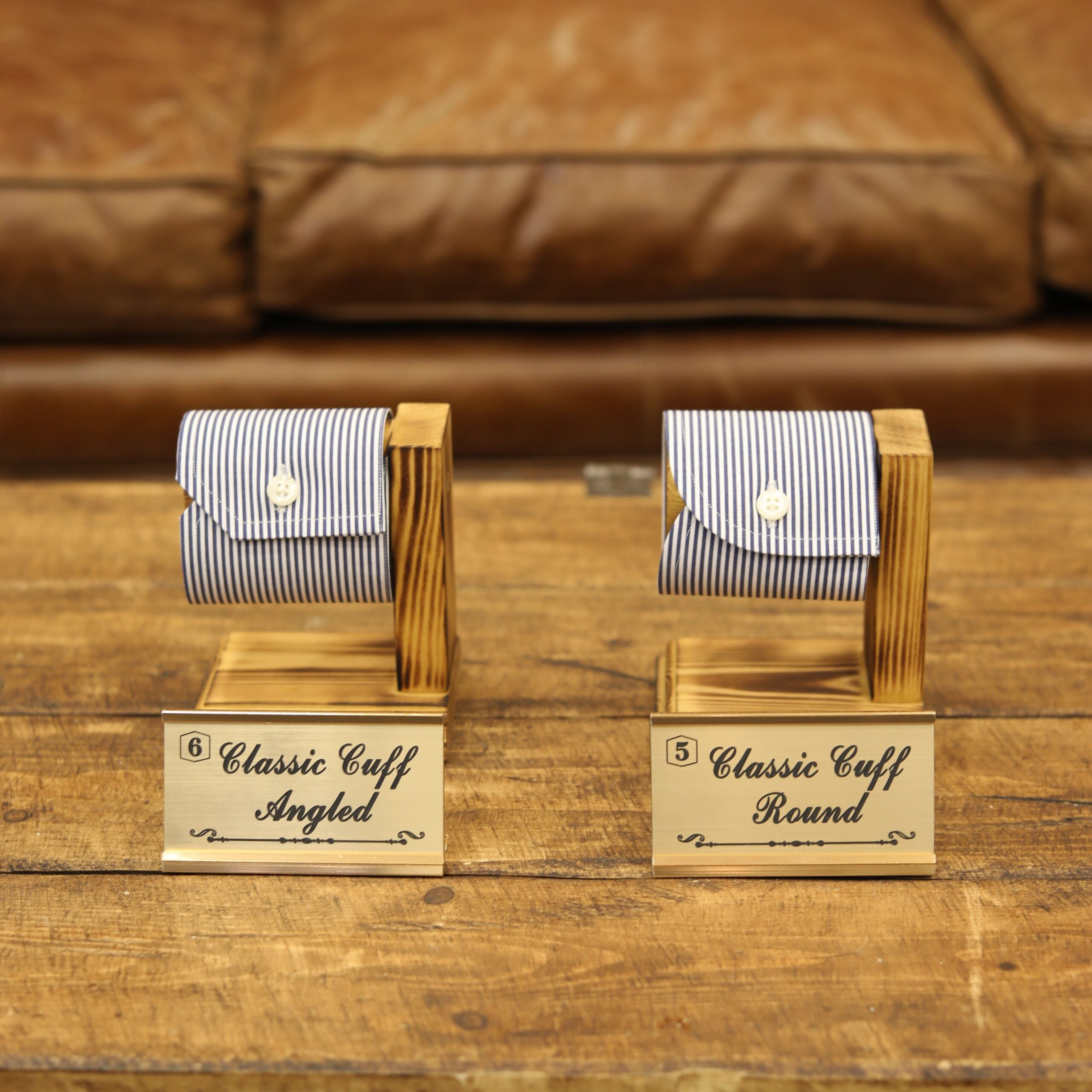
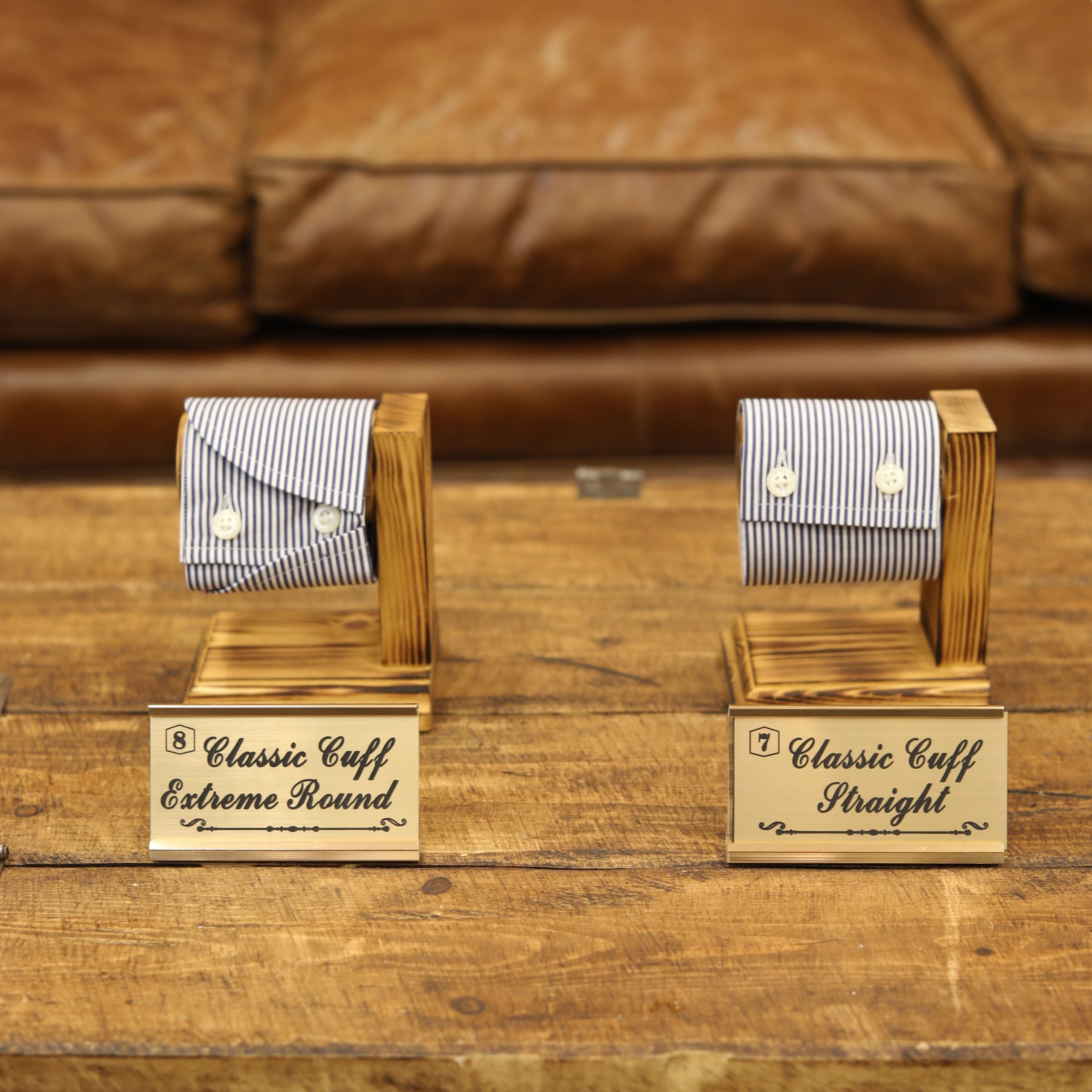
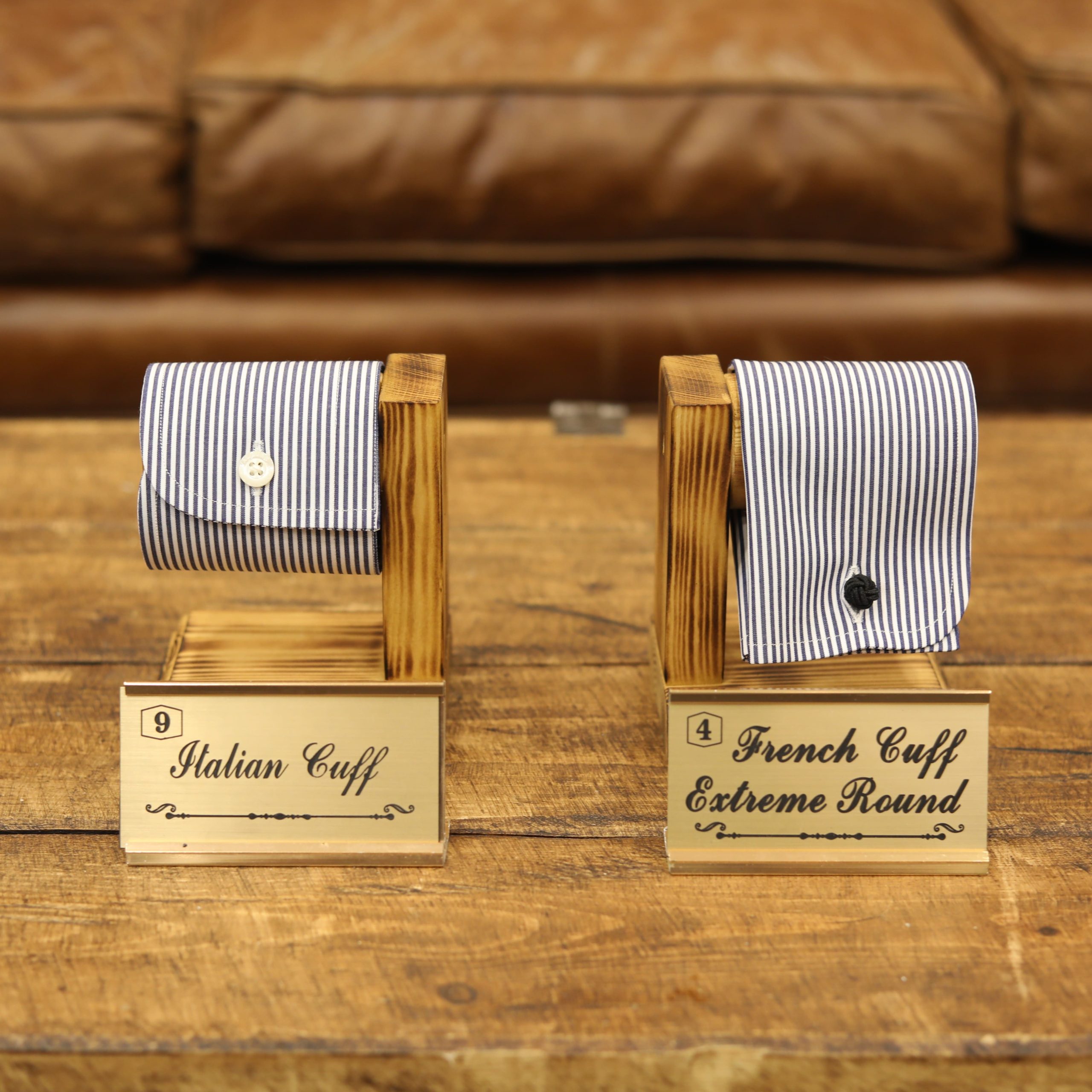
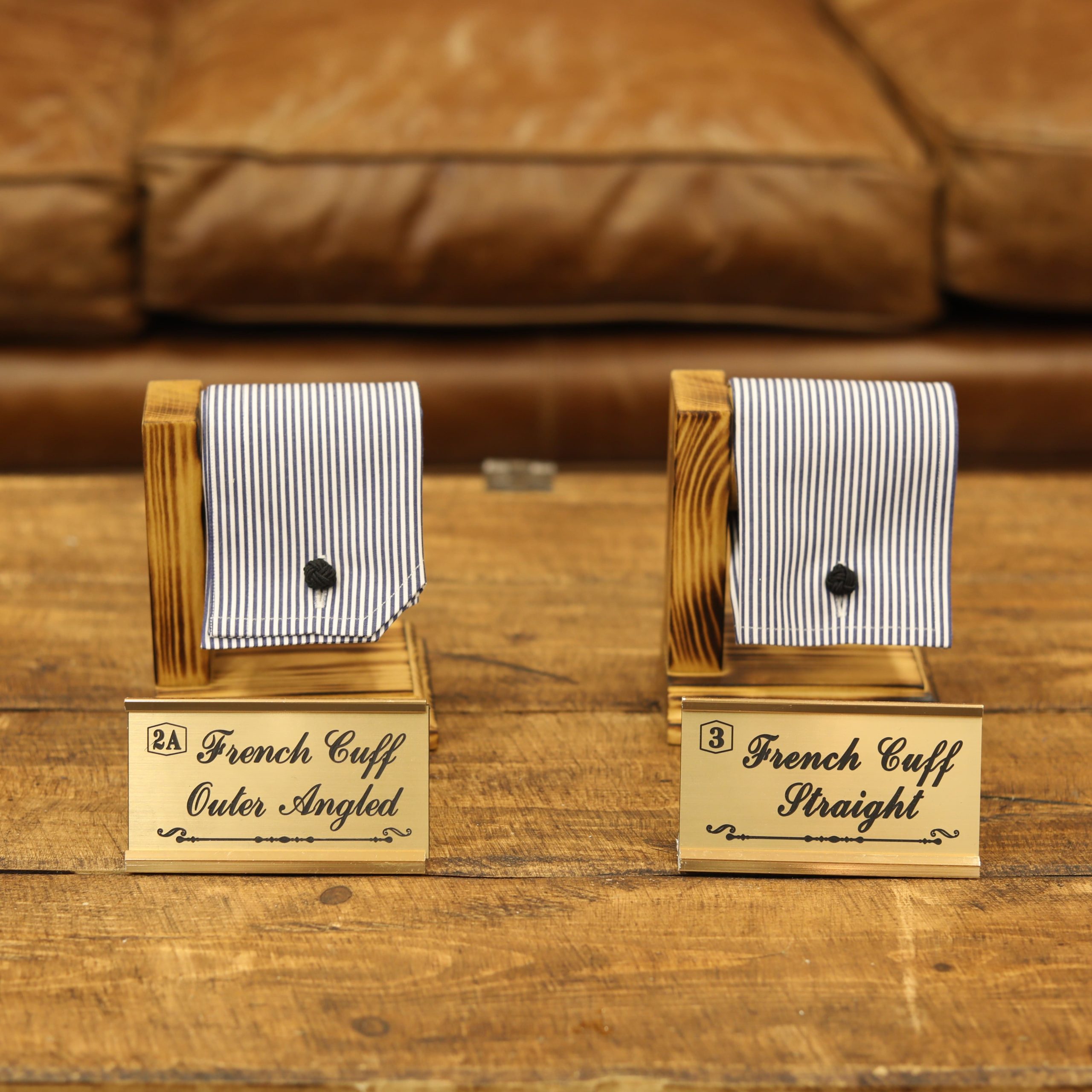
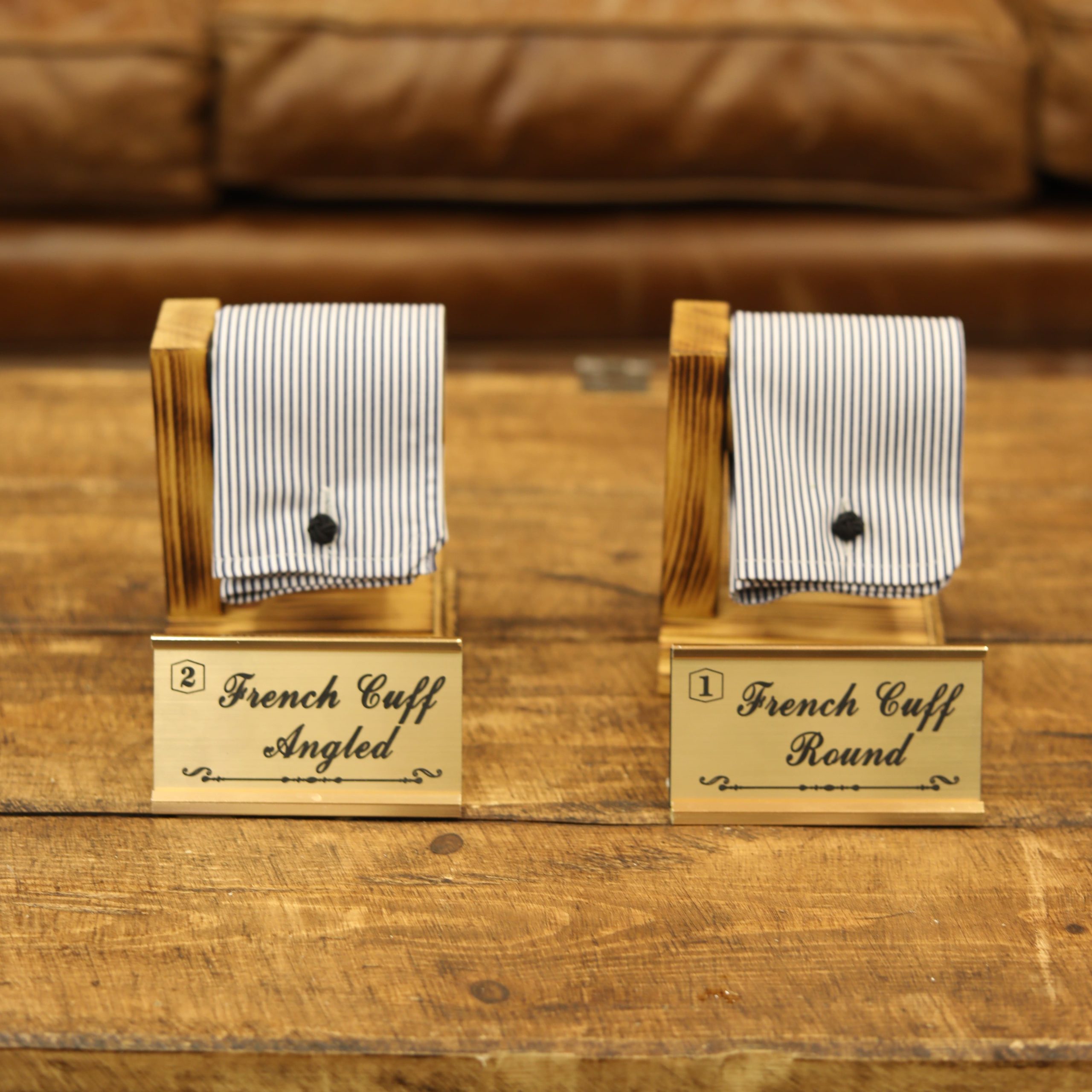
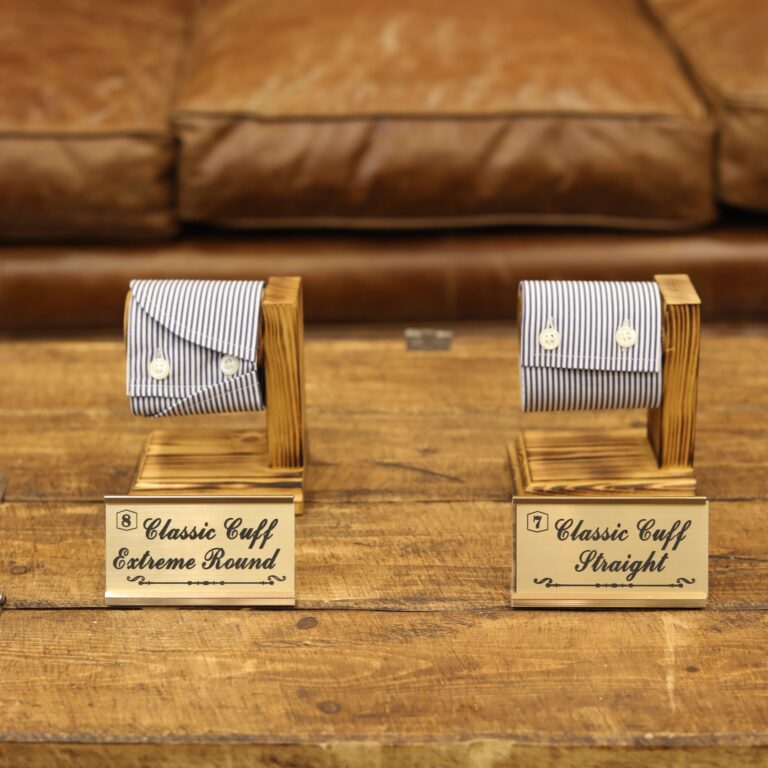
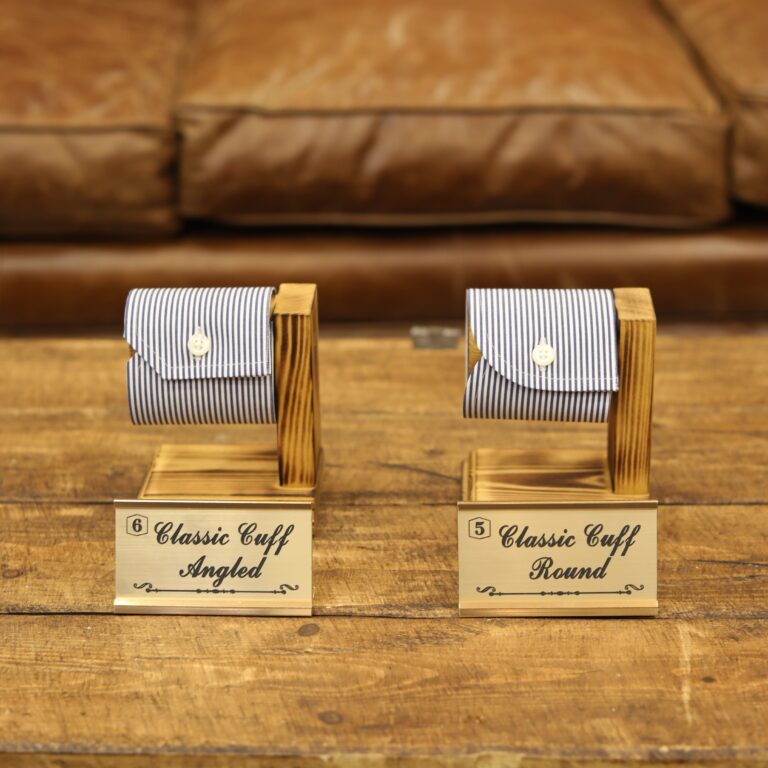
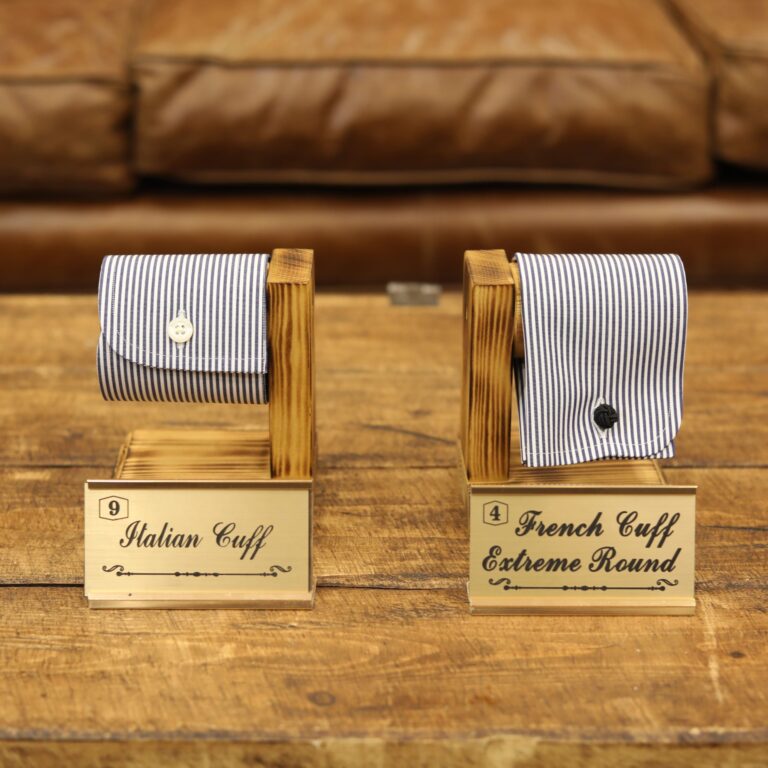
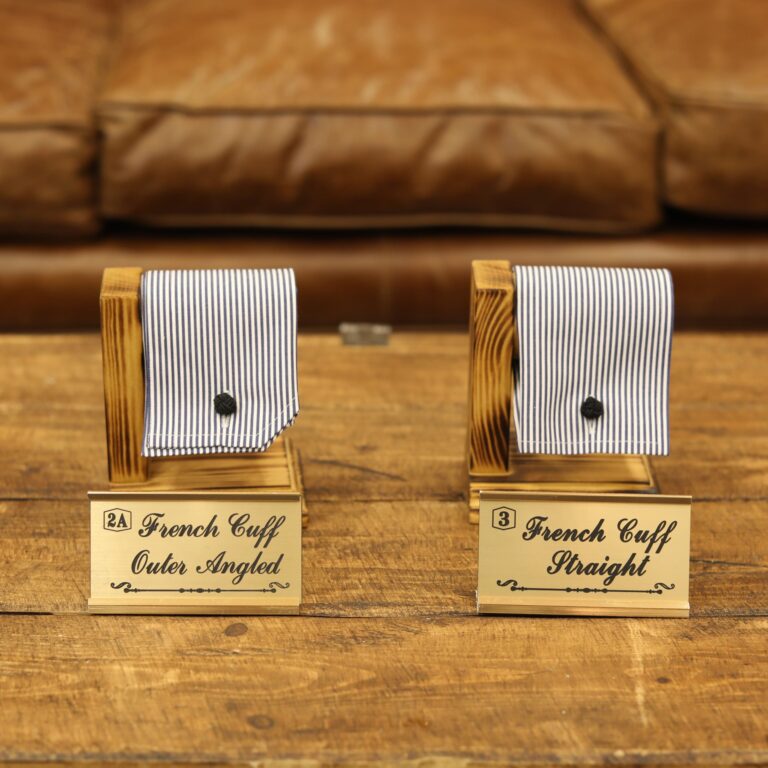
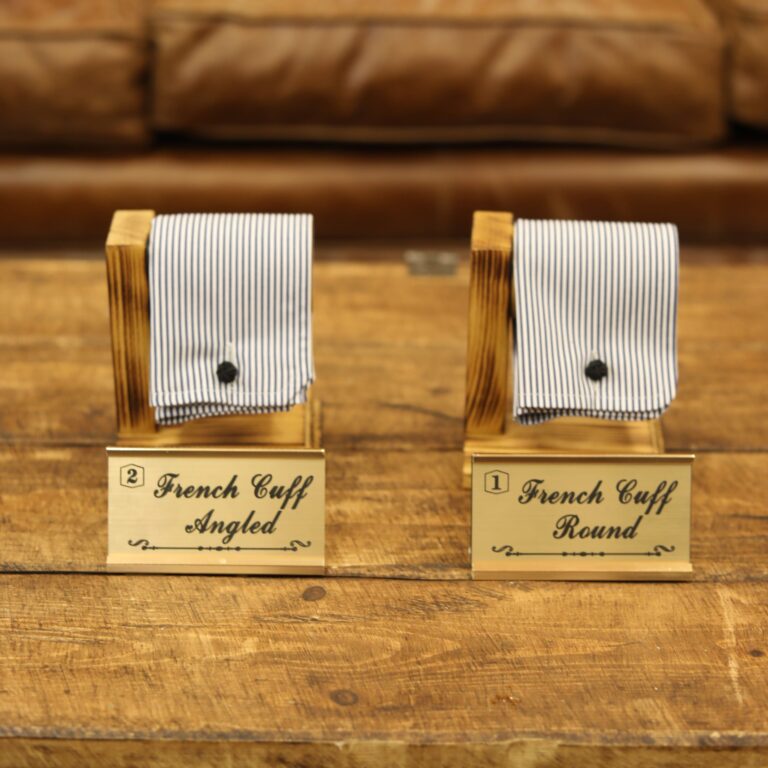
Images of Cuff Styles at The White Stripes Tailors & Shirtmakers
How Does Your Watch Size Affect Cuff Fit?
Watch size matters, but so does how snug the cuff is to begin with. Slim dress watches and larger ones call for different amounts of room, and the cuff’s starting fit changes how much is needed. No single addition suits every watch and every wearer.
Slim watches. A thin watch often needs little or no accommodation, especially if the cuff already has some ease. If you only wear a slim watch with dress shirts, a generous allowance may leave the cuff looser than necessary on days you skip the watch.
Larger or thicker watches. A bulkier watch is more likely to push against the cuff edge as you move, so it may need more space. There’s a limit, though. Add too much circumference and the cuff becomes unstable on the wrist and can drift over the hand.
So the question isn’t whether you can force the cuff over the watch. It’s whether the cuff moves comfortably through an ordinary day and settles back into place afterwards.
If you rotate between several watches, bring the ones you actually wear with shirts. A cuff that’s comfortable over your largest watch will look roomier with a slimmer one, and that trade-off is easier to judge in person than from a size chart.
Cuff Fit vs Sleeve Length: What Is the Difference?
The two work together but solve different problems. Sleeve length decides how much fabric runs along the arm. Cuff circumference helps control where that sleeve ends once the cuff is fastened.
The two interact: the sleeve carries some extra length for movement, and a properly fitted, buttoned cuff stops it travelling too far over the hand.
This also explains two common misdiagnoses. A cuff held back by a watch can make the sleeve look short, and lengthening the sleeve without freeing the cuff may just leave surplus fabric bunching above the wrist. Equally, an oversized cuff can let a perfectly good sleeve fall over the hand, and shortening that sleeve could cost you the freedom you need when reaching.
What you notice | What to check first |
The cuff catches only when you wear the watch | Whether the watch-side cuff needs more room |
The cuff slips over your hand even without the watch | Whether the cuff circumference is too loose |
The sleeve pulls back when you reach, with or without the watch | Sleeve length and overall movement room |
The cuff works without a jacket but catches beneath one | The jacket sleeve opening and cuff bulk |
Treat the table as a prompt for a conversation with a tailor, not a diagnosis from appearance alone.
Signs Your Shirt Cuff Does Not Fit Properly
The cuff catches on the watch. If the cuff edge snags on the case or bezel whenever you move your hand, there probably isn’t enough room on that wrist. You may find yourself tugging the cuff over the watch, or leaving it unbuttoned and half open. This is the classic situation a watch allowance is meant to solve.
The cuff feels tight when you fasten it. Struggling with the button, or feeling pressure once it’s closed, suggests the cuff is too small for the wrist and watch together. If it feels the same without the watch, the cuff itself may simply be cut too close.
The cuff slides too far over your hand. A cuff that drifts toward your knuckles is probably too loose. Check it before you shorten the sleeve, because the sleeve may not be the problem.
The sleeve pulls when you move. If it tugs back as you reach, bend your elbow or lift your arm, look at sleeve length and movement room as well as the cuff. A cuff held behind a watch can add to the pulling
How Should a Shirt Cuff Sit Under a Suit Jacket?
Try the shirt with the jacket you normally wear. Judge a shirt in its intended outfit, because some problems only appear once everything is on.
Look closely at the jacket’s sleeve opening. A French cuff, the folded-back style closed with cufflinks, can catch inside a narrow jacket sleeve, and cufflinks change how snugly the cuff closes. Extra room added for the watch might help at the wrist and then create a new restriction inside the jacket. In that case, assess both layers together rather than simply enlarging the cuff.
For visible cuff, our dress-shirt guide suggests roughly a quarter-inch showing beneath the jacket sleeve. Treat that as a visual reference, not a reason to force either garment into an uncomfortable position. Get the shirt fitting comfortably first, then look at the jacket’s sleeve length and opening.
What Should You Tell Your Tailor About Your Watch?
A few details make a fitting far more productive:
- Bring the watch you actually wear. “I wear a large watch” tells a tailor much less than seeing how it sits under the cuff.
- Say which wrist it goes on, so it’s clear which cuff needs attention.
- Bring the shirt that shows the problem, and mention whether the issue appears only with the watch.
- Bring your usual jacket, so the cuff can be checked under the sleeve.
- Bring your cufflinks if you wear French cuffs.
- Mention if you swap watches, so a sensible compromise can be discussed.
- Say whether the shirt has been washed. Fabric can change slightly after laundering, so follow the care label rather than improvising with hot washes.
Planning your next bespoke shirt?
If you’d like to discuss shirt fit, cuff comfort and watch allowance in person, arrange a consultation with the White Stripes Tailors & Shirtmakers in Dubai or Abu Dhabi.
Frequently Asked Questions
Should a shirt cuff fit over a watch?
If you want the watch covered when your arm is relaxed, yes, as long as it doesn’t catch or press persistently. A roomy cuff may manage this on its own, while a closer-fitting one may need a watch allowance on that wrist.
Should you measure your wrist while wearing your watch?
There’s no single rule, and it can depend on the shirtmaker’s method. The important thing is that your watch is present when the cuff is assessed. Ask whoever is fitting you how they prefer to measure.
Can a tailor make a shirt cuff larger?
Sometimes. It depends on how the cuff is constructed, how much fabric is available and where it fastens. Have a tailor inspect the shirt first, and don’t assume that moving a button alone will give enough room or leave a neat closure.
Does a larger watch always need a larger cuff?
No. A large watch can sit comfortably under a cuff that was cut with generous ease. What matters is the watch together with how snug the cuff already is.
Is cuff fit the same as shirt sleeve length?
No. Sleeve length governs how far the fabric reaches along the arm, and cuff fit governs how the sleeve closes at the wrist. A cuff catching on a watch doesn’t automatically mean the sleeve is too short, so check both.

Asif
I’m Asif, a men’s tailoring and bespoke specialist at The White Stripes Tailors and Shirtmakers with 15+ years of hands on experience in creating custom clothing and bespoke suits. I focus on delivering perfect fit, comfort, and modern Style for every client based in the UAE and beyond.
I work closely with clients to understand their preferences and guide them in selecting the right fabrics, designs, and fittings for both formal and casual wear. My approach combines traditional tailoring techniques with current fashion trends to ensure high-quality results.
Through The White stripes, I also share practical insights on suit fabrics, styling tips, and tailoring guidance to help customers make confident choices.
All Posts
Written By:
Recent blog posts

Why Are Suit Pockets Sewn Shut? A Guide for First-Time Suit Buyers
Asif
October 13, 2026
Read More »