
Last updated: October 16, 2026
Most men who come in for their first bespoke suit have already thought about fabric, colour, and maybe the fit around the waist. Very few have thought about the lapel. In our experience, it’s one of the last things customers consider and one of the first things people actually notice about a jacket before the fabric, before the stitching, sometimes before the fit itself. It frames your chest, sets the tone of the outfit, and quietly tells people whether you’re dressed for a boardroom, a wedding, or a black-tie dinner.
With formal dressing spanning everything from boardrooms to five-star wedding venues, we’ve found that getting the lapel right matters more than most people realise. This guide walks through the three main lapel styles, how they compare, how width and proportion play into the decision, and how we personalise the choice for each customer who sits down with us.
There are quite a few lapel styles and variations in menswear. In our experience, though, most customers tend to choose from three main styles: notch, peak, and shawl. So, that’s where we’ll focus in this guide.
What Is a Suit Lapel and Why Does It Matter?
The lapel is the folded flap of fabric attached to the collar of a jacket, running down toward the chest. Technically, it’s what remains of an old-fashioned upturned collar, which is why it still connects to the collar at a seam we call the gorge the point where the two pieces of fabric meet.
Beyond the anatomy, the lapel does real visual work. Its shape and width affect how broad or narrow your shoulders look, how formal the jacket reads, and how the whole silhouette balances out. We’ve seen a jacket with the wrong lapel for the occasion look off even when the fit was otherwise flawless a shawl lapel at a client meeting, for instance, reads as fancy dress rather than professional attire, no matter how well it’s cut.
That’s really the starting point for this whole decision: lapel style isn’t a cosmetic detail, it’s a formality signal.
The Three Main Bespoke Suit Lapel Styles
There are three lapel styles you’ll come across most often in men’s tailoring: notch, peak, and shawl. When customers sit down with us to discuss a suit, we usually start with these three because each one gives the jacket a different feel and works better for certain occasions.
Notch Lapel
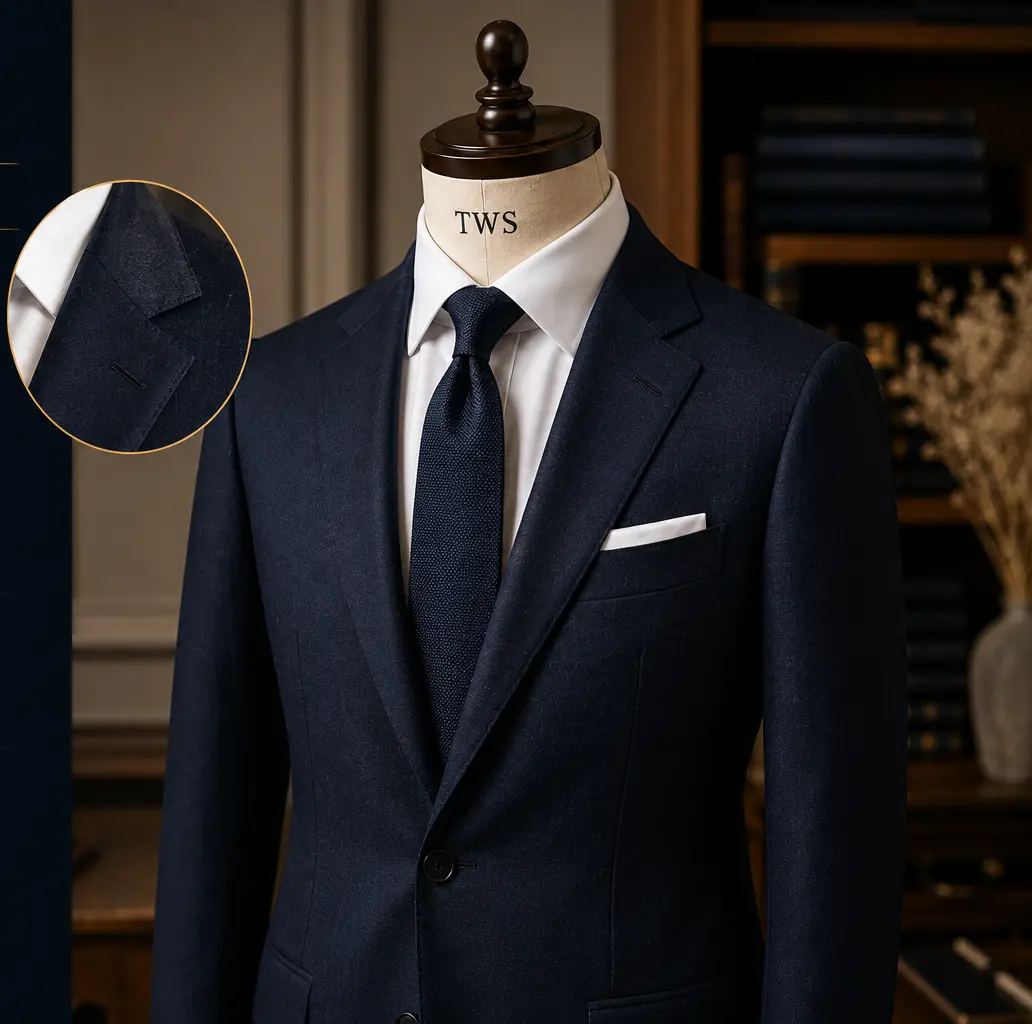
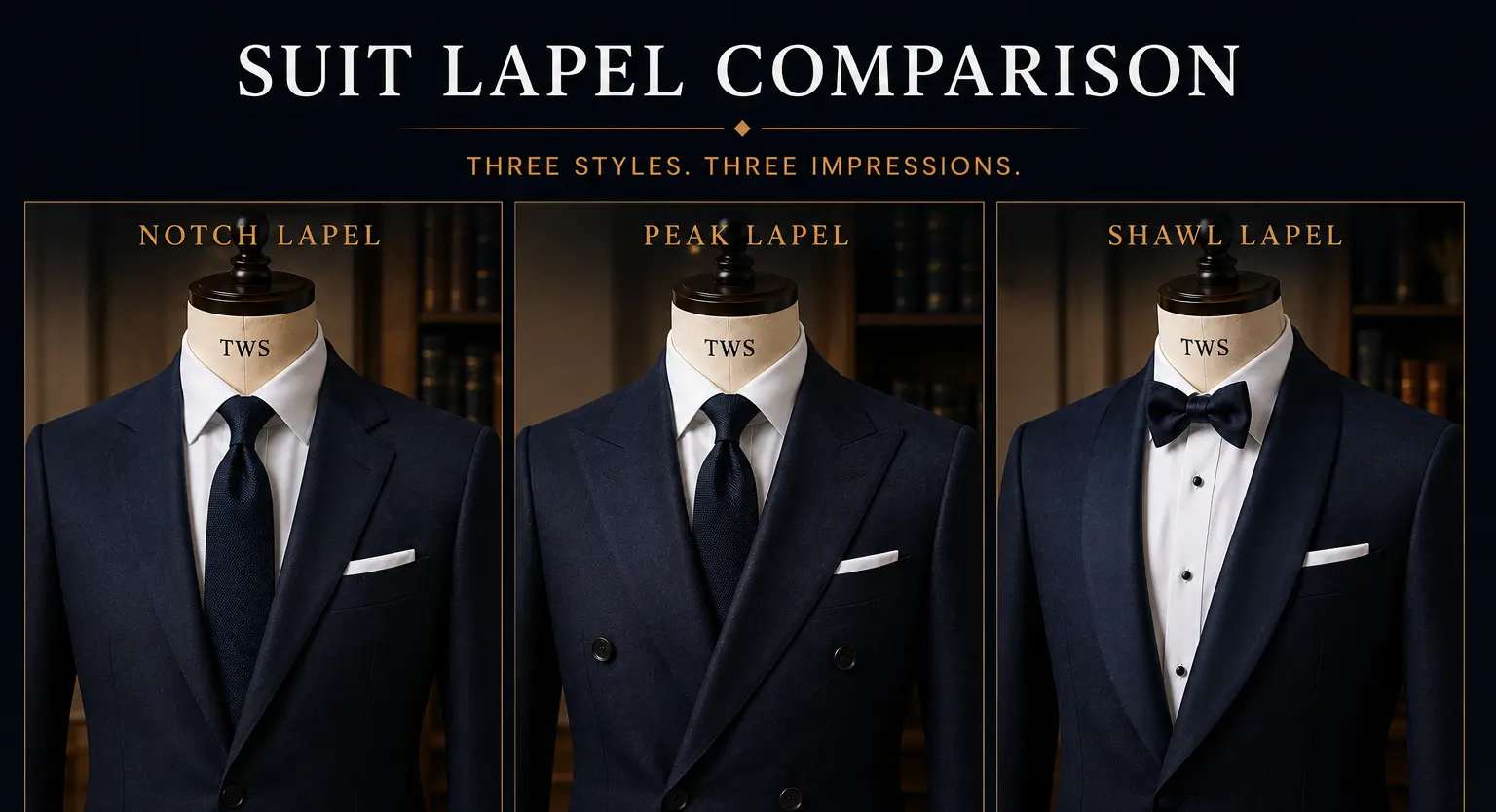
The notch lapel is the one you’ll recognise instantly, because it’s the default on almost every business suit and off-the-rack jacket sold anywhere in the world. It has a simple V-shaped notch where the collar meets the lapel, typically at an angle somewhere between 75 and 90 degrees.
Where it’s worn: Everyday business suits, blazers, sports coats, and casual-to-semi-formal jackets.
What it works with: Almost exclusively single-breasted jackets. We rarely put a notch lapel on a double-breasted suit the geometry of the overlapping front just doesn’t suit it.
Overall appearance: Understated, versatile, and safe. It doesn’t try to make a statement, which is exactly the point.
Why our customers like it: For daily office wear, client meetings, or a first bespoke suit that needs to work in as many settings as possible, this is usually where we start the conversation. It’s the lapel we get asked for most often, simply because it’s the least likely to feel out of place.
Peak Lapel
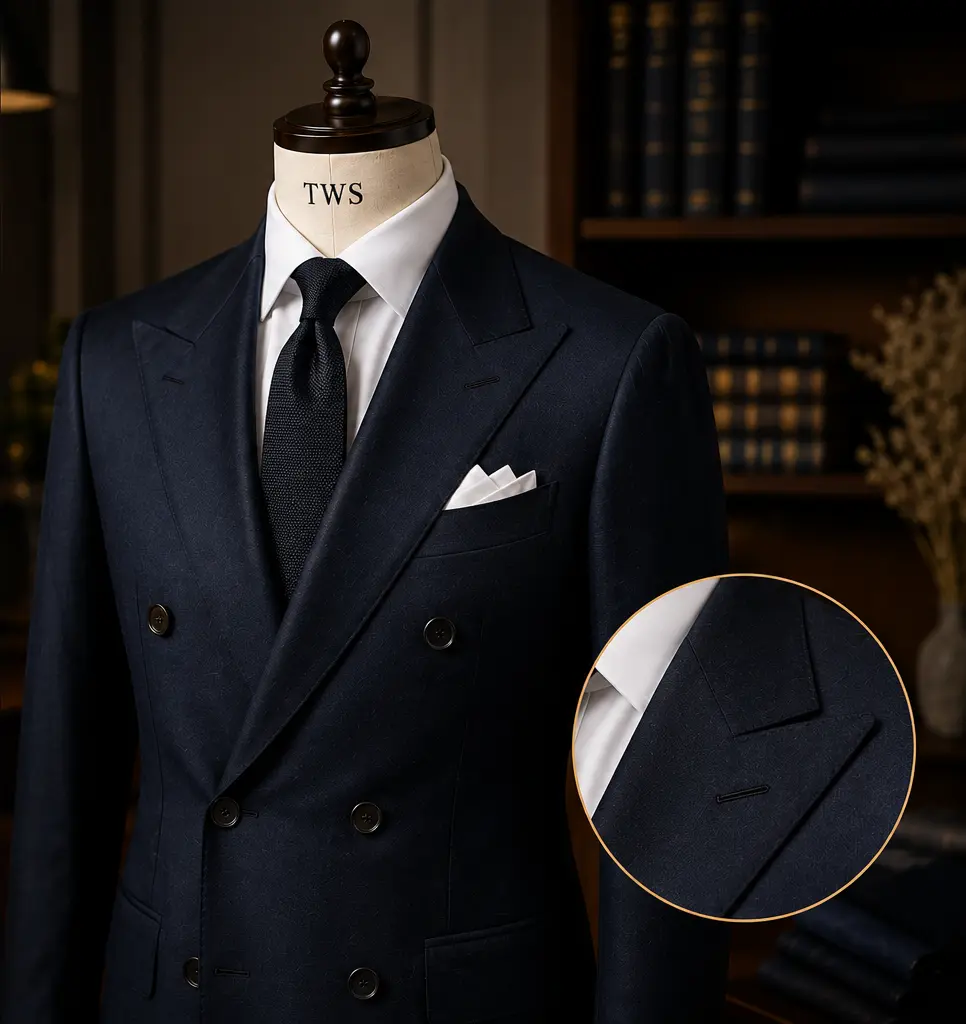
The peak lapel is more assertive. Instead of a simple notch, the lapel’s edge points upward and outward, extending past the collar seam like a small arrow. It naturally draws the eye up and out, which is why we associate it with a stronger, more commanding silhouette.
Where it’s worn: Formal business suits, double-breasted jackets, and increasingly, single-breasted suits worn to weddings and evening events.
What it works with: It’s our standard recommendation for double-breasted suits, since the wider lapel line balances the overlapping front panels. It also works well on single-breasted jackets when a customer wants a more formal or authoritative look.
Overall appearance: Sharper and more deliberate than a notch lapel, without going all the way to black-tie formality.
Why our customers like it: Grooms often lean toward a peak lapel because it photographs well and gives a bit more presence than a notch lapel, without tipping into full tuxedo territory. We also see a lot of men choose it when they want their business suit to carry a bit more weight in the room senior client pitches, board meetings, that sort of occasion.
Shawl Lapel
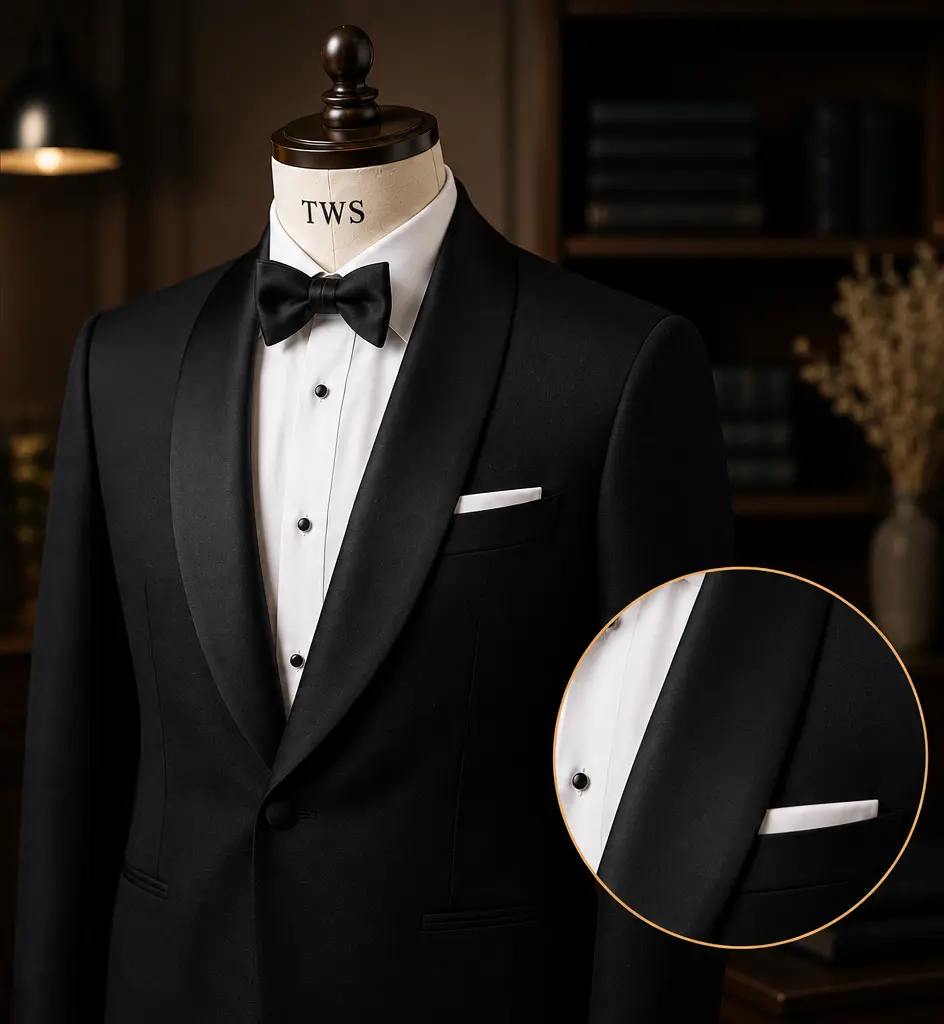
The shawl lapel is the odd one out, because it doesn’t have a notch or a point at all. Instead, it curves in one continuous, rounded line from the back of the collar down to the button no sharp angles anywhere.
Where it’s worn: Almost exclusively formal eveningwear dinner jackets, tuxedos, and formal wedding attire.
What it works with: Tuxedos and dinner jackets, usually finished with satin or grosgrain facing on the lapel itself.
Overall appearance: Smooth, refined, and unmistakably formal. Because there’s no interruption in the line, it reads as more elegant and less “structured” than the other two.
Why our customers like it: Black-tie events, formal galas, and evening weddings are where this lapel earns its keep. We’ve written more on this style specifically in our shawl lapel suit guide, which covers construction and fitting for shawl lapel tuxedos in more depth. As a general rule, though, we wouldn’t recommend this one for the office.
Notch vs Peak vs Shawl Lapel – Quick Comparison
Lapel Style | Best For | Formality | Overall Look |
Notch Lapel | Business suits, daily wear, casual weddings | Low to medium | Clean, versatile, understated |
Peak Lapel | Weddings , double-breasted suits, formal business | Medium to high | Sharp, confident, structured |
Shawl Lapel | Tuxedos, black-tie events, formal evening weddings | Highest | Smooth, elegant, refined |
Notch vs Peak vs Shawl: The Practical Differences
Knowing the definitions is one thing knowing when each one actually makes sense is more useful, and it’s usually the second question customers ask us once they understand the basics.
Notch vs Peak: The practical difference isn’t really about looks, it’s about how much presence you want. A notch lapel blends in; a peak lapel stands out slightly. When we’re helping a customer choose between the two for a business suit, we usually ask whether they want the jacket to be background or foreground. Client-facing roles where authority matters sometimes lean toward peak; day-to-day office wear usually doesn’t need it.
Peak vs Shawl: Both carry more formality than a notch lapel, but they’re not interchangeable. A peak lapel can still work in a business or semi-formal context. A shawl lapel really can’t it’s built for black tie and reads as costume-like anywhere else. When a customer is deciding between the two for a wedding, it usually comes down to how formal the event is: a peak lapel suit for a daytime or hotel ballroom wedding, a shawl lapel tuxedo for a strict black-tie evening affair.
Notch vs Shawl: These two sit at opposite ends of the formality scale, so we rarely see genuine indecision between them it’s more a case of matching the occasion correctly. A notch lapel on a dinner jacket looks like a business suit that wandered into the wrong party. A shawl lapel on a Monday morning looks like you’re still wearing last night’s tuxedo.
How to Choose a Lapel for Different Occasions
Formal dressing spans a wide range of settings DIFC boardrooms one day, a beachfront wedding the next so we always encourage customers to think through the occasion first.
Business meetings and corporate environments: A notch lapel is the safe, professional default. If a customer wants a touch more authority for senior meetings or presentations, we often suggest a peak lapel on a single-breasted suit as a reasonable step up without tipping into “too dressed.”
Weddings: This depends on your role and the formality of the venue. Grooms often go with a peak lapel for a bit more visual presence, while groomsmen typically stay one step down in formality with a notch lapel, so the groom stands out. For strictly black-tie weddings, a shawl lapel tuxedo is the appropriate choice.
Formal events and galas: Peak or shawl lapel, depending on the dress code stated on the invitation. When customers are unsure, we tell them a shawl lapel with a bow tie is rarely wrong for a genuinely formal evening.
Black-tie occasions: Shawl lapel is the traditional choice; peak lapel with satin facing is an accepted, slightly more modern alternative we’re seeing more of. A notch lapel has no place in true black tie.
Climate and practical wear: UAE heat and heavy air-conditioning cycling don’t change which lapel style is “correct” for an occasion, but they do affect fabric choice and construction something we cover in detail in our floating canvas suit construction guide. In our experience, a well-constructed lapel, regardless of style, should hold its shape rather than curl or go limp indoors.
Does Lapel Width Matter?
Yes width has a real, visible effect on how a jacket sits, separate from which style you’ve chosen. This is something we pay close attention to during fitting.
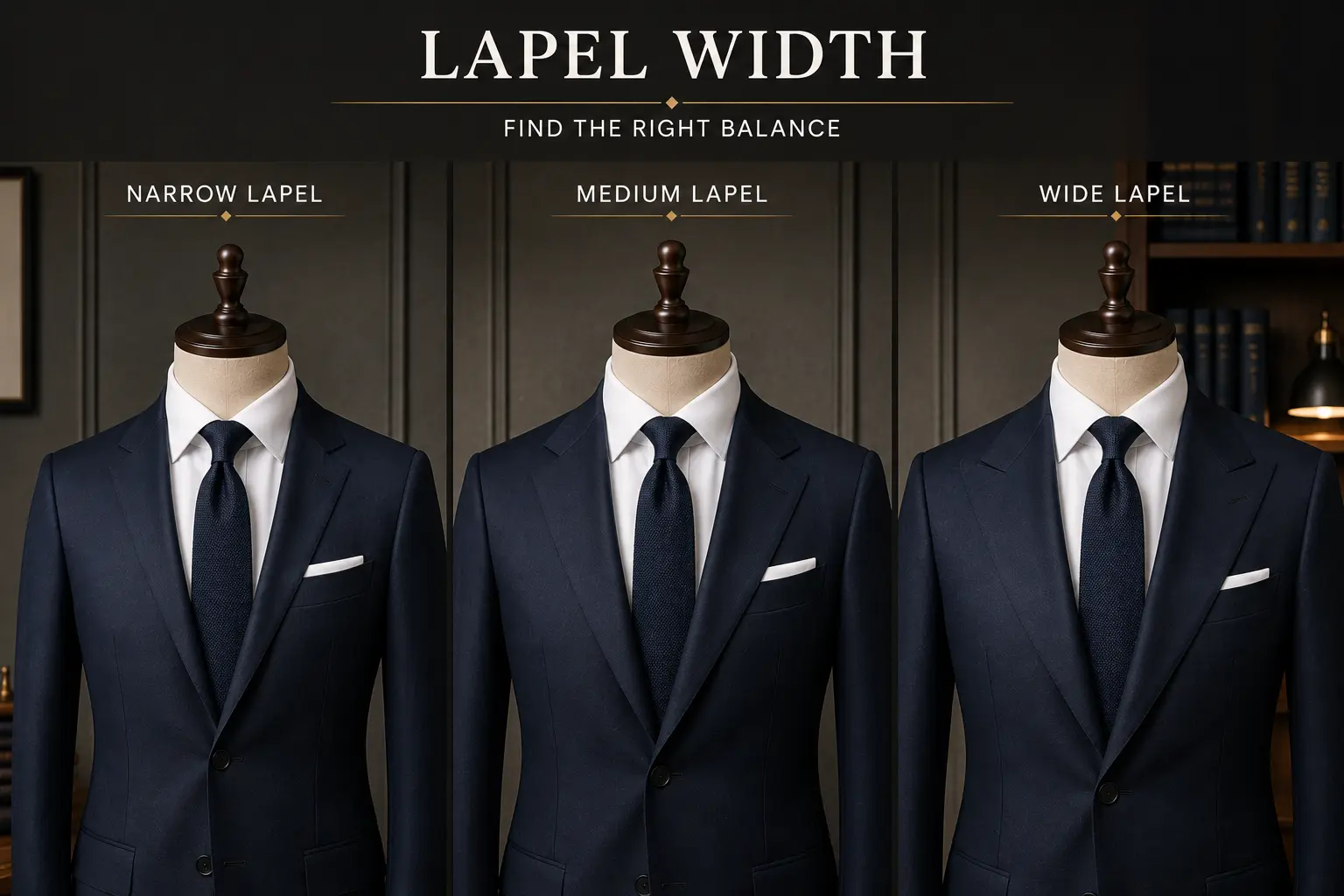
- Body proportions: A lapel that’s too narrow for your frame can make broader shoulders look top-heavy and disconnected from the jacket. One that’s too wide on a slim build can overwhelm the chest and make the suit look borrowed.
- Jacket balance: Lapel width should roughly correspond to the width of your shoulders and the cut of the jacket. A slimmer, more tailored cut generally calls for a narrower lapel; a fuller-cut jacket can carry more width.
- Overall appearance: Subtle width adjustments change how modern or classic a suit feels. Narrower lapels tend to read as contemporary; slightly wider ones lean traditional.
- Tie and shirt relationship: As a loose guideline, we tell customers that tie width should roughly echo lapel width a slim tie under a wide lapel (or vice versa) tends to look mismatched. Shirt collar spread matters too; a wider spread collar generally pairs better with a slightly wider lapel, while a narrow point collar suits a narrower one.
How Your Bespoke Tailor Can Personalize the Lapel
This is really where bespoke tailoring earns its name. Off-the-rack suits come with a fixed lapel one width, one angle, no adjustment. A bespoke jacket doesn’t have that limitation, and over the years we’ve found there are a number of things worth factoring in before settling on the final shape:
- Jacket proportions how the lapel width relates to the overall length and structure of the jacket
- Shoulder width wider shoulders can usually support a slightly bolder lapel
- Chest a fuller chest often benefits from a peak lapel’s more structured line
- Collar the gorge height (where lapel meets collar) affects how long or short your torso appears
- Lapel width fine-tuned rather than picked from a standard chart
- Button stance where the jacket closes affects how much lapel is visible and how the roll falls
- Fabric a heavier wool holds a wider lapel’s shape differently than a lighter tropical wool
- Occasion what the suit is actually going to be worn for, realistically, not aspirationally
- Personal style some customers genuinely prefer a bolder look regardless of “rules,” and we think a bespoke process should accommodate that too
If you’re getting fitted for a first bespoke piece, we always encourage having this conversation early we go into the broader fitting process in our perfect fitting suit guide, which covers measurements and proportion beyond just the lapel.
Which Lapel Should You Choose for a Bespoke Suit?
If you want a straightforward answer, here’s how we usually break it down for customers:
For a versatile business suit → Notch lapel. It works in almost every professional setting without drawing unwanted attention.
For a wedding suit (as the groom) → Peak lapel, unless the event is strictly black tie, in which case a shawl lapel tuxedo is more appropriate. Our wedding suits page goes into more detail on groom-specific tailoring.
For a more formal business look → Peak lapel on a single-breasted suit, or a double-breasted jacket if you want to go further.
For a tuxedo → Shawl lapel is the traditional route; peak lapel is an accepted modern alternative.
For a first bespoke suit → We often recommend starting with a notch lapel. It’s the most flexible choice while you get a feel for how bespoke tailoring fits and drapes, and you can experiment with bolder lapels on future pieces.
Frequently Asked Questions
What are the three main suit lapel styles?
Notch, peak, and shawl. Notch is the standard business lapel, peak is a more formal, structured option, and shawl is a rounded lapel reserved for tuxedos and black-tie eveningwear.
Which lapel is best for a wedding suit?
It depends on the formality of the event. Most grooms we work with choose a peak lapel for daytime or venue weddings, while a shawl lapel tuxedo is reserved for strictly black-tie evening weddings.
Can you wear a peak lapel on a single-breasted suit?
Yes. While peak lapels are the standard on double-breasted jackets, they’re also a common and accepted choice on single-breasted suits when a more formal or commanding look is wanted.
What lapel width should you choose?
There’s no single correct width it should be proportionate to your shoulders, chest, and the overall cut of the jacket. This is one of the details we adjust during fitting rather than something you need to decide in isolation.
Is a shawl lapel only for tuxedos?
Effectively, yes. It’s technically possible to see it elsewhere, but it’s so strongly associated with formal eveningwear that wearing it outside a tuxedo or dinner jacket context tends to look out of place.
Which lapel is best for a business suit?
A notch lapel is the standard, versatile choice for everyday business wear. A peak lapel is a reasonable option if you want your suit to carry a bit more formality or authority.
Does lapel style affect how a suit looks?
Significantly. The lapel is one of the most visible parts of a jacket, and its shape and width directly influence how formal, modern, or traditional the whole suit reads.
Final Thoughts
Lapel choice isn’t a small stylistic afterthought it’s one of the clearer signals a jacket sends about the occasion it’s meant for. The good news is that you don’t need to memorise formality charts to get it right. Start with the occasion, keep proportion in mind, and let us handle the finer adjustments around width, gorge height, and construction when you come in.
If you’re planning your next bespoke suit and want to talk through lapel options in person, book an appointment with The White Stripes Tailors and Shirtmakers in Dubai or Abu Dhabi.

Asif
I’m Asif, a men’s tailoring and bespoke specialist at The White Stripes Tailors and Shirtmakers with 15+ years of hands on experience in creating custom clothing and bespoke suits. I focus on delivering perfect fit, comfort, and modern Style for every client based in the UAE and beyond.
I work closely with clients to understand their preferences and guide them in selecting the right fabrics, designs, and fittings for both formal and casual wear. My approach combines traditional tailoring techniques with current fashion trends to ensure high-quality results.
Through The White stripes, I also share practical insights on suit fabrics, styling tips, and tailoring guidance to help customers make confident choices.
All Posts
Written By:
Recent blog posts
What Can Be Altered on a Suit? A Dubai Tailor’s Guide to What’s Possible
Asif
October 13, 2026
Read More »
What to Wear for a Business Meeting in Abu Dhabi: An Executive Dress Code Guide
Asif
September 25, 2026
Read More »