
Last updated: September 1, 2026
There’s a particular kind of Sunday evening that only exists after a holiday. The suitcase is half unpacked on the bedroom floor, the photos are already sitting in a folder you’ll forget to look at again, and somewhere in the back of your mind you’re running through tomorrow’s calendar. Somewhere in that same mental list is a smaller, quieter question: what are you actually going to wear.
It sounds trivial next to everything else waiting for you at the office. But for most professionals in the UAE, the first days back carry a specific kind of pressure meetings stacked one after another, clients to see, a commute that goes from outdoor heat to an overcooled office in the space of a lift ride. Getting dressed for that isn’t quite the same as getting dressed for a normal Tuesday in February.
This is usually the moment people either reach for whatever’s clean and hanging closest to the door, or they pause for a second and actually look at what’s in the wardrobe. The second option tends to be more useful than people expect.
Coming Back Is Its Own Kind of Adjustment
A holiday changes your relationship with clothes, even briefly. You’ve probably spent a week or two in things that were chosen for comfort rather than presentation linen shirts, sandals, clothes that didn’t need to hold up under fluorescent lighting for nine hours straight.
Then the routine returns, and with it, a wardrobe that hasn’t been touched in weeks. Sometimes it still works perfectly well. Sometimes you open the closet and realise the shirt you used to reach for has gone slightly out of shape, or the suit you last wore in March doesn’t sit the way it used to.
None of this is really about the clothes changing. It’s usually you a few weeks of different routine, maybe a slightly different weight, a slightly different headspace. The wardrobe is just the thing that shows it first.
Look at What You Already Have Before You Buy Anything
Before adding anything new, it’s worth going through what’s actually there. Which shirts do you put on without thinking twice? Which trousers pair easily with more than one jacket? Is there a suit sitting at the back that you avoid because the fit has never quite been right, even when it was new?
This is usually more revealing than people expect. A wardrobe full of clothes doesn’t automatically mean a wardrobe full of options. Plenty of men in Dubai and Abu Dhabi end up with a wardrobe full of suits and still feel like they have nothing to wear, because half of them don’t fit properly and the other half were bought for one specific event and never repeated.
A smaller collection of pieces that genuinely work with each other, with your current role, with the way your week actually runs tends to serve you better than a closet full of things bought in a hurry.
Fit Is the Part Most People Notice Without Realising It
You can put someone in beautiful fabric and still have it look wrong if the fit isn’t there. It’s one of those things people register instinctively before they can explain why.
A jacket that sits properly across the shoulders, without pulling or bunching at the collar. Sleeves that finish where they should, so the shirt cuff shows just enough underneath. Trousers that fall cleanly instead of pooling around the ankle. A shirt collar that sits close to the neck without choking you by 3pm.
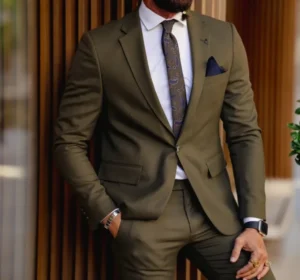
These are small, specific details, but they add up to something bigger the difference between a suit you’re aware of all day and one you forget you’re wearing. That’s really the point of tailoring, when it’s done properly: it starts from your shoulders, your posture, the way you actually move through a day, rather than asking you to adjust to a standard pattern that was never made with you in mind.
For anyone who spends long stretches in meetings, moving between the office, the car and a client site, that difference is felt rather than seen. Comfort at 5pm matters more than how a suit photographs at 9am.
Dressing for the UAE, Specifically
Working in the UAE means dressing for a climate that most tailoring traditions weren’t originally built around. You might walk from a car into a hot street, then straight into an office running its air-conditioning hard enough to need a jacket indoors. A day can involve a client meeting, a business lunch, another meeting across town, and a dinner in the evening often without much time in between to change.
Fabric choice matters here in a way it doesn’t in cooler climates. Lightweight and tropical wools can offer structure without the weight, holding their shape through a long day while still breathing enough to be comfortable outdoors. Linen and linen-wool blends bring more airflow, at the cost of a slightly softer, more relaxed look better suited to daytime meetings than a formal boardroom. Cotton, particularly for shirts, tends to be the most dependable option for long indoor days, provided it’s not too heavy a weave.
None of this means chasing the lightest fabric available. It means choosing something that actually matches how you’ll wear it a suit that looks sharp in a photograph but turns uncomfortable after an hour indoors isn’t doing its job, however good it looked on the hanger.
Building a Wardrobe That Actually Works Together
A useful work wardrobe doesn’t need to be large. It needs pieces that can move between the different situations a normal week throws at you client presentations, ordinary office days, dinners that follow straight on from work.
Rather than buying a separate outfit for every occasion, it’s more practical to build around a small number of versatile pieces. Navy, grey and charcoal remain reliable starting points for suits, not because they’re safe or unimaginative, but because they combine easily and don’t limit you to one type of meeting. Shirts and accessories are where personal style tends to show up more naturally, once the essentials are sorted.
Over time, as you add to this, the wardrobe should start to feel more like yours and less like a uniform you happened to end up with.
The Shirt Does More Work Than It Gets Credit For
Of everything in a work wardrobe, the shirt is probably worn the longest and thought about the least. It’s against your skin for most of the day, visible under a jacket in every meeting, and one of the first things people register even when they’re not consciously looking at it.
A shirt that fits well should feel comfortable when you sit down, reach for something, or lean across a table not just when you’re standing still in front of a mirror. Collar sitting properly, shoulders following your actual shoulder line rather than a generic size chart, sleeves ending where they should. Classic white and light blue remain the easiest colours to build around, with a subtle pattern or two for variety.
When a shirt is made to your own measurements rather than adjusted from a standard size, these details stop being guesswork. For someone with a full calendar, having three or four shirts you can reach for without a second thought removes one small decision from every morning.
A Suit Should Feel Like Yours, Not Borrowed
The best suits don’t feel like something put on for the occasion. They feel like an extension of how the person already dresses.
That comes down to more than colour or cut. Lapel width, button stance, the shape through the waist, the drape of the trouser all of it contributes, but so does personal taste. Some men want something understated that disappears into the background of a meeting. Others prefer a bit more character in the cloth or the finishing.
There’s no single template for the right suit. The right one is whichever version actually suits the work you do and the way you move through your week which is also why a proper wardrobe tends to be built gradually, piece by piece, rather than assembled in one afternoon of shopping.
Fewer, Better Pieces
Coming back from a break sometimes brings the temptation to overhaul everything at once. Usually that’s unnecessary.
It’s more useful to think about which pieces genuinely earn their place a suit built to last years rather than one season, shirts that still fit properly after repeated wear, trousers that work with more than one jacket. Buying less, but choosing more carefully, tends to leave you with a wardrobe that’s easier to manage and gets more actual use.
It also means you start to understand what actually works on you, rather than following whatever’s currently being sold as the trend.
The Quiet Confidence of Not Thinking About Your Clothes
There’s a specific kind of ease that comes from knowing your wardrobe simply works the shirt sits right, the suit doesn’t need adjusting halfway through a meeting, the trousers are still comfortable after sitting in traffic for forty minutes.
It’s not something you notice in the moment so much as something you’d notice the absence of. After a break, when you’re already recalibrating to the pace of work, that’s one less thing pulling at your attention during a client call or a long afternoon of back-to-back meetings.
Clothes obviously don’t do the work for you. But they can stop getting in the way of it.
Where The White Stripes Tailors & Shirtmakers Comes In
At The White Stripes Tailors & Shirtmakers, this is really the starting point for most conversations with clients not a full wardrobe overhaul, but a look at what’s actually needed. A suit that’s been overdue for a proper fit. A run of shirts made to measurements rather than adjusted from a standard size. Fabric chosen with the UAE’s particular rhythm of heat, air-conditioning and long days in mind.
If the return to work this year feels like the right moment to look at your wardrobe properly, that’s a conversation worth having at our studios in Jumeirah Lakes Towers, Dubai, or Al Hashemi Building on Al Dhafra Street, Abu Dhabi — less about buying something new, and more about making sure what you wear actually works for the way you work.

Asif
I’m Asif, a men’s tailoring and bespoke specialist at The White Stripes Tailors and Shirtmakers with 15+ years of hands on experience in creating custom clothing and bespoke suits. I focus on delivering perfect fit, comfort, and modern Style for every client based in the UAE and beyond.
I work closely with clients to understand their preferences and guide them in selecting the right fabrics, designs, and fittings for both formal and casual wear. My approach combines traditional tailoring techniques with current fashion trends to ensure high-quality results.
Through The White stripes, I also share practical insights on suit fabrics, styling tips, and tailoring guidance to help customers make confident choices.
All Posts
Written By:
Recent blog posts
What Can Be Altered on a Suit? A Dubai Tailor’s Guide to What’s Possible
Asif
October 13, 2026
Read More »

What to Wear for a Business Meeting in Abu Dhabi: An Executive Dress Code Guide
Asif
September 25, 2026
Read More »